
>
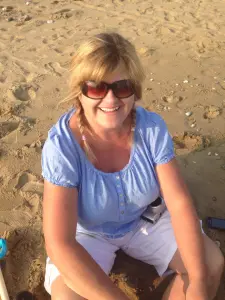
| James (0:10) | Welcome to another podcast from the Health Tech Research Centre in Brain and Spinal Injury. I've been chatting to some really interesting folks and you can check out previous episodes to find out just who they were. Doctors, researchers, innovators and the really important people, people who have lived through brain injury themselves and I'm joined by a dear old friend Anne Ricketts on the call today, who's been through a brain injury experience and is now doing some really interesting work as a patient advocate.Anne, I wonder is it all right if you start just by telling us a little bit about what happened to you, what's your story? | |
| Anne (0:46) | Absolutely yeah and good morning James. Do you know, I see the story as one thing, that's about what happened to me as a human being and because I had no self-awareness it really doesn't matter what happened to me because I didn't live through it psychologically if that makes sense. So the most important thing I think about my story are the insights that have been gained from it and the recognition of gaps within systems.I was a systems person prior to the brain injury and I think that's why my brain naturally recognised where there were gaps and when I started advocating for other people those gaps stuck out more prominently because I was seeing the same things repeated over and over and over again and actually it didn't even matter where somebody was living in the world, they were all talking about the same things. So I started up the Brain Injury Global Picnic because there was so little awareness about brain injury at the time, people don't, still don't I think really understand what that means or what it can mean and where it's a spectrum you know what it can mean to different people who've been affected in different ways. | |
| James (2:07) | Can you give us an example of some of those gaps that we see wherever they are? | |
| Anne(2:14) | Yeah gaps, I mean I'll give some examples and well actually the first thing that happened was nobody called an ambulance to the scene of my injury. So by the time I reached the hospital, the hospital are thinking oh you've got here under your own steam therefore there can't be very much wrong with you so there's a gap there in between you know what is what is considered to be an emergency. If I'd have been carried by ambulance things would have been very different so you know what happens to you in those first few seconds has a knock-on effect that can actually push you down one path or another you know for the course of your recovery. | |
| James (3:00) | Yeah certainly we hear about you know just a concussion, people are the walking wounded but actually many people have really quite serious problems for months or even years after quotes a minor injury like that. | |
| Anne(3:13) | Yeah absolutely I think with a minor injury as well you know we've got so much research James there's absolutely tonnes of research that tell us you know what conditions might be pre-existing, what kind of things might be going on in a person's life that can give you more of a chance of getting post-concussion syndrome for example and those things are missed because we don't address the neuro-inflammatory cascade right at the very beginning. Those things persist and they can persist over years and decades.I've talked to a lot of people actually who fall into that bracket and the other thing I think that I'd really like to get in there about concussion is you know everybody got really excited. I can remember when I used to you know campaign about sports injuries long before we had all the NFL stuff and everything else going on because it was something that I noticed. People are saying oh this is this is something that's happened to me and because I'm speaking to so many people every day you start to see patterns and of course then there was a lot of campaigning and advocating around sports injury but it became a really big thing and it still is a really big thing and the trouble with that is if you look at the NHS website they take you over for somebody with a concussion to a sports injury website. People don't equate with sports injury if they haven't had a sports injury so there's another gap. There's another gap.
I've spotted the gap. I've written a funding proposal about it. I've now got to find people that are interested enough in the group of people who are not sports-related concussions to actually follow that. |
|
| James (5:03) | We know that there are many of them with you know elderly people having sort of low-level falls are really really common now and they might have those kind of injuries that get sort of labelled as you say into the sorts of things that people playing rugby kind of get but they're not playing rugby so why would it? | |
| Anne(5:19) | No and ice, ice-related falls. You know you've mentioned the elderly but there's you know accidents at work fall into that category. Accidents at home is there's somebody who their anvils put something up high not fixed it and it's fallen on somebody's head and somebody else actually in a museum with a similar thing with with a big vase falling on their head because it wasn't fixed and you've got to remember that there are people outside of what has become the interesting category for researchers because that gets my name in the newspaper if I provide something that makes that better. | |
| James (5:59) | Yeah so there's gaps around this sort of triage and diagnosis. Yeah. Presumably there are gaps at every stage so there are gaps in acute treatment, there are gaps in discharge. | |
| Anne(6:10) | Yes there are. There were also gaps in understanding of course in people working actually in the A&E department. So for example when they were doing the Glasgow Coma Scale on me they waited until I was conscious which was interesting as much of the time I was unconscious but there's no recording of them trying to do it when I was unconscious and because I didn't respond in any way to anything they did they wrote down that I was slightly deaf.So that kind of blew me away that somebody could be entrusted to go through that triage and come to that conclusion on a very fit healthy 36 year old woman. You know there are so many things but I had critical illness policies with work with at home, I had Bupa, I had all kinds of insurances that would have privately have covered me but any treatment that was available I also had an opportunity to bring a legal case against you know where it happened and and that all fell through because you know I was sent home from hospital to an empty house with nobody there to look after me. So again not putting somebody or something in place, a follow-up appointment, this happens to people right across the world and it is so common it's unbelievable. | |
| James (7:42) | So have you seen, obviously you've been doing this sort of stuff for a long time now Ann, have you seen progress? Are things getting better? Are these gaps still the same? | |
| Anne(7:51) | Absolutely James, without a shadow of a doubt. I used to campaign about all of these gaps and because it was the only thing I knew how to do. I didn't know how to solve it, I didn't know the people that I should be speaking to and to start with I just put all these posters up and they go out on LinkedIn and you know Facebook and Twitter as it was then and so on and so forth and I noticed over the years that some of the things that I kept bringing to the fore and bringing to the fore, I'm like a dog with a bone, I don't let things go and of course I understand and recognise that there are people following through behind me, there are people having brain injuries today who need that help.It's never ever going to stop because it's a you know it's an ongoing cascade of people falling into this category of brain injury and I've noticed over the years that so many of those things have been picked up and we've seen changes in how charities for example organise their websites and you know I know I've had my finger in that pie as well and I've driven people crazy with you've got to do this and you've got to do that and you've got to you know because I'm just a nobody but I understand systems, I understand how we recognise information.
I was an international sales manager so quite good with communication. |
|
| James (9:13) | I think that's really interesting often we think about you know we use this phrase experts by experience and we think about oh well you really understand brain injury because you've had one but actually everybody brings so much more to the party than just their brain injury. You've just described a bit about your history and your experience and your professionalism and people have all sorts of different skills and understandings and it's all really valuable stuff isn't it? | |
| Anne(9:39) | Yeah I mean I think that even though I wasn't conscious of any of that I think that that your brain is wired a certain way to start with you know it's kind of there in your DNA if you like and it continues to work beneath the surface so for me you know that iceberg effect if you like where brain injury is this great big barrier you know at the surface of the water and the real me can't push through that barrier is that it's got no way of finding its way through and all people see is the odd behaviour that comes out at the surface. They don't see the effort that I'm trying to put into making sure that effort lines up with who I am and because of the brain injury it doesn't line up. The wiring isn't there for it to line up anymore and this is why I always think you know I am more than a story James and there is a lot more to me than just a story and there's so much more that I can give than just a story and just the gaps. | |
| James (10:39 ) | Yeah definitely and you've given lots as you mentioned in passing the global picnic and listeners will be thinking hang on a minute get back to the worldwide sandwich and tell us about that so that was an awareness campaign. | |
| Anne(10:52) | Yeah it was actually do you know what it started from a dream I was thinking about you know what am I going to do with my life what do I want to do because you don't I still at 10 years on didn't understand the impact of my brain injury. I would say that it's taken me a good I'm now at year 26 but I would say it's that only the last one or two years that I've really understood the impact of my brain injury. Yeah and I was thinking about you know what am I going to do with my life and I love to write I really do love to write and that that goes back to you know childhood and thought well I'm going to be a writer and then you know I'm going off down that path and I'm psyching myself up for what I'm going to do and what I'm going to say and then suddenly out of the blue one morning not even thinking about brain injury or anything else I had this dream it was a livid living dream where I could literally hear the sound of frisbees you know people playing and laughter of people playing in a park birds singing leaves rustling colours in the dream was so vivid it was unbelievable but I just sat up upright and that's what I've got to do it's a global picnic you know and and that's where it started. I wrote about the dream very briefly and very poorly I have to say on Facebook and people just clamoured around this idea so within it was about two and a half months three months maximum I've got hundreds of people all coming together and talking about what we're going to do we've got a website together we started putting stuff out and we did it very quickly and actually there's an organisation on the west coast of America and they they had a some stuff going on anyway but they they reckoned that they'd reached at least 60,000 people through the global picnic and I knew that I'd reached about 15 through my efforts so yeah that was the TBI network in in the western states so and it was phenomenal because we had people I would never have imagined that a tweet or whatever could could reach people in other countries but it did but the picnics ended up going from New Zealand, Australia, South Africa we had them in Israel, in Egypt, in Russia, Spain, France, UK, obviously Ireland and then mostly North America and off to Vancouver Island so we kind of missed the eastern lump of the world but we got almost all the way around the world it was phenomenal. | |
| James (13:33) | Incredible and I guess what it shows is there's kind of a need for that your people want to come together and share their experience and reflect on things and they want to raise awareness because it is a passion because | |
| Anne(13:45) | people are not understood and people are looked at and judged as you judge other people if you don't know about brain injury yourself as a carer or family member and you've got somebody who's now got a brain injury you make up every excuse you can in the world for that behaviour other than saying do you know what that could be because they've just had a brain injury or you know concussion or whatever and that's what the global picnic was really aimed at was bringing those stories together and getting people to you know get articles written in newspapers to get media coverage you know it was all good because everybody was putting stuff on social media you know we ended up I think in the following March because it gave us such a flow in the following March when we did March's Brain Injury Awareness Month this is donkey's years ago this is 2012 we had the first picnic 2013 March was our first campaign for March's Brain Injury Awareness Month but the posts on Facebook were reaching about 60,000 people a week if you bear in mind as well that the first Facebook support group that was ever put up was put up by me so there was no real place for for people to focus on on social media until I don't know I kind of fought my way through the mire and did something very badly in a lot of cases because I still couldn't put a sentence together but we did it. | |
| James (15:20 ) | Yeah and again you've described quite a few times how you've kind of seen a gap you've seen the need and you felt compelled to kind of do something about it and I'm sure there are many thousands of people who are really grateful that you took the time and effort to do that. | |
| Anne(15:34) | Yeah it really just like I said it came from that dream I mean how could you say no once you've had a dream like that you can't just sort of say oh well you know that was nothing it was so vivid and it just took on its own life which to me meant that was just supposed to happen. | |
| James (15:50) | Yeah that's fantastic so I know you're involved in a project at the moment about social work and brain injury called Heads Together I wonder if you can tell us a little bit about that project what the aims of that? | |
| Anne(16:03) | The aims of the project is to try and fill some of the gaps so there were two paths for people to go through the private health path or the general path that most of us follow with some NHS help and so on and so forth that we were aware of there are some gaps within the system nobody's negligent there are just gaps in the system and that's all based around us educating and you know increasing knowledge of the needs of people with a brain injury and one of the ways that we knew that we could do that was so so many people have the help of a social worker but social workers don't understand the behaviours and needs of somebody with a brain injury and again it comes back it's very much to that thing that I was saying about families if you don't understand brain injury you judge it from the experience that you have about people you know you're not understanding it from the correct perspective and that can cause harm it can cause you know gaps in the system where you know somebody's not getting the support they need it can even lead to something like suicide for example because of a lack of understanding so the aim was to to fill that gap you have to do that they will fill the gap and educate social workers um across the country and that that is going into a second phase and there are discussions around that second phase and what that will incorporate at the moment | |
| James (17:38) | and you're finding that social workers are hungry for this stuff they kind of want to know it or is kind of bit of you don't know what you don't know and they're kind of oblivious | |
| Anne(17:48) | actually when we we we kicked the whole project off with the Melanie George conference in London a memorial conference from Melanie George so it was around capacity and this is what we're really talking about here is is um you know when people lack capacity they are vulnerable and you know we should be supporting vulnerable people in our society without a shadow of doubt whatever the cause of their vulnerability we should be there to support them that went out that that reached an enormous number of people the recording of that when we started to do the work on the the training for the social workers and we were holding zoom meetings and things like that for people I was getting messages come through on social on social media saying please talk to our social workers from whatever local authority and you know that was all pushed back and we were doing it as a collaborative effort but there was there was just so much interest in it and people really wanted to know what's it like and I've always called it the inside of brain injury and the outside of brain injury and it's like living in two different worlds so when you're stuck on the inside of brain injury I always used to feel like I was hanging on to the periphery of the everyday world by my fingertips I'm just about you know hanging on in there because there was so little that was relative or related between those two worlds anymore um and actually the people that are in the normal world if you like they're the aliens they're the ones that are weird so you don't understand that it's you and um you know your neurologic neurological systems or whatever that have changed so I yeah I find amusement in it as well um as I go along but it's it's yeah and it's bringing that language it's bringing that language of experience because you know when we use academic language for example it can miss um a lot of points it can you know just literally fly off over somebody's head they don't get what you mean and the other big thing for me um you know why I think that I drew people to me was always just to explain to them why you know this you need to know this but this is why you need to know this because otherwise it hangs out there like a piece of information you can't and I think yeah that was another thing that we covered but the the next stage for the the social work project that we're running you know that that's going to be interesting I've written a proposal that you know for me it's about building a a tech technological platform for it to all sit on so that anybody can get to it and we haven't got a way you know putting a trainer to to run something because it's there online and you just do it but that's that's all in discussion there's nothing you know concrete on that at the moment sounds like a really useful resource though to | |
| James (20:49) | have you know that we know that people who work in kind of social care they're really working hard they're overstretched they're dealing with lots and lots of different issues and lots of different things and finding the time to do that training and keep up to date with everything must be really difficult but it is really important isn't it that you understand the causes of the kind of behaviours that you might see in the ways that people might kind of react especially when we're talking about this sort of hidden disability you might look perfectly | |
| Anne(21:15) | quote normal yes yeah but actually yeah and you know I'm going to say things to you that I'm going to gap fill my brain wants to gap fill not me not my personality not who I am I don't want to gap fill I want everything to be absolutely based around the truth I want it to be 100% accurate I'm a systems person that's the way I work I'm scientific that's the way I work but my brain knows that I must fit in with this social circle around me because people that don't fit in get isolated and the brain knows that you're more vulnerable even more vulnerable when you're isolated so it gap fills and it will say anything that seems to be a fit in order to be able to um stay within those social norms and that that anything will fit isn't what you would design um or signal or decide upon it's just whatever comes up whatever's the easiest thing for your your brain to grab so sometimes it's completely off the ball you know it's completely | |
| James (22:24) | off the mark yeah maybe inappropriate and not right yeah but they make assumptions based on | |
| Anne(22:34) | personality they don't make assumptions based on neurology and that is the big business it is base your view on the neurology and we'll teach you about the neurology so that you can do that | |
| James (22:48) | yeah so well it sounds fascinating look forward to hearing a bit more about that project and hopefully this uh new platform can come together too well listen and we are running out of time but thanks ever so much for having a chat and talking about some of the work i will stick some links to some of the things that we talked about in this podcast uh underneath do please click those and check them out brilliant thank you very much james you can find other episodes in this podcast series on your favourite podcast supplier do have a listen to other ones and look out for new stuff coming up |
More like this:
Society for Research in Rehabilitation Winter Conference 2025 Recap
The Society for Research in Rehabilitation was held at the University of Essex for people passionate about [...]
Life Course Theme Podcast
Listen to our Life Course Theme Lead, Professor Topun Austin, talk with James Piercy about our life [...]
Innovation Podcast – Eye Focus
James talks to Stephanie Rossit about spatial neglect and a new app designed to help the many [...]