

>
| James (0:08) | This is a podcast from the HealthTech Research Centre in Brain and Spinal Injury, where I've been chatting to researchers and innovators and patients and carers and anybody who will spare half an hour to have a chat with me about the exciting, interesting projects that they're working on at the moment. And today I'm joined by Patrick Beldon from Cortirio. So Patrick, you are an innovator, I guess, and developing new technologies to help in brain injury.Can you tell us briefly what Cortirio is? | |
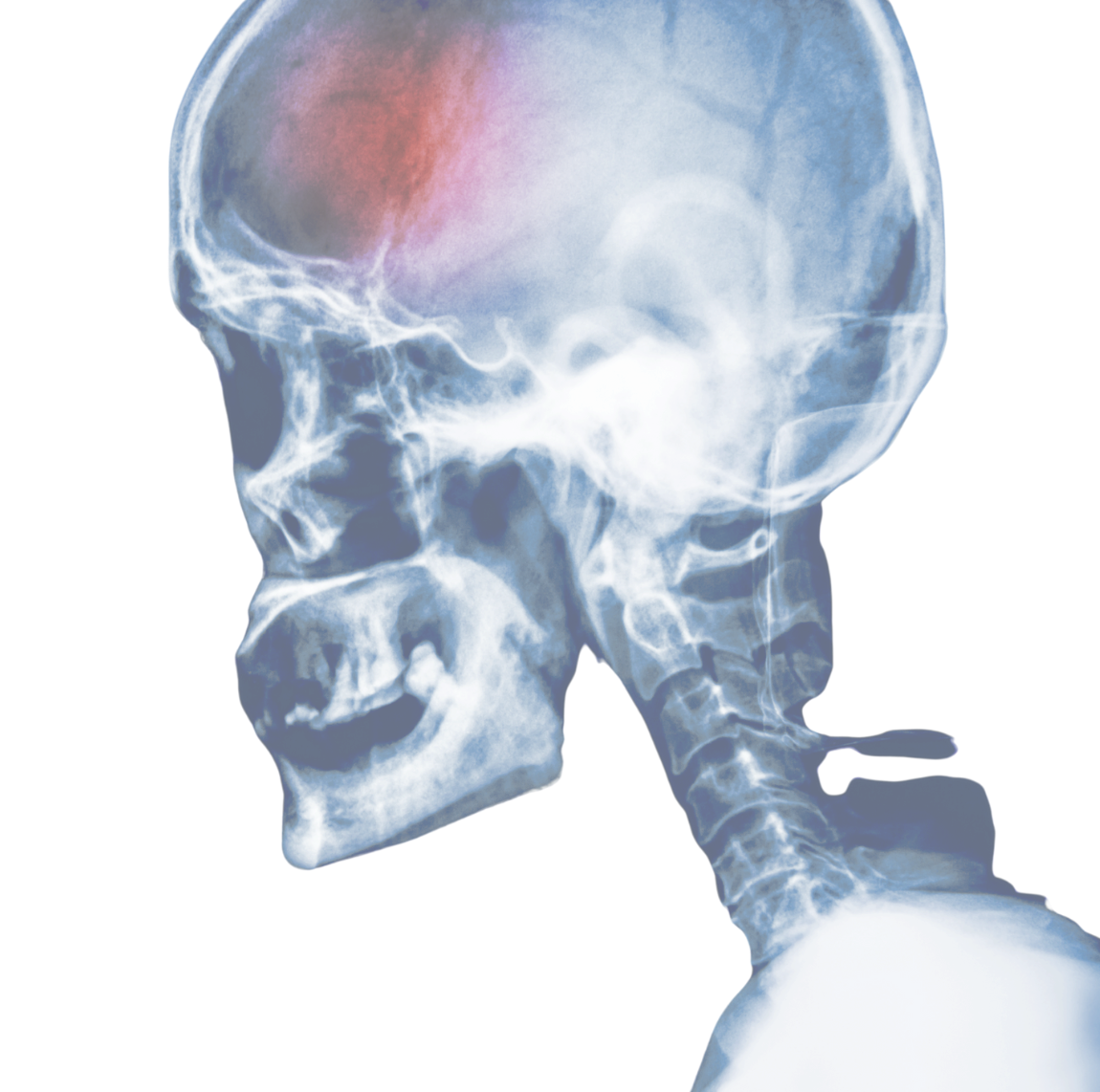
| Patrick (0:36) | Yeah, that's right. So Cortirio is a company that's developing portable brain imaging to diagnose brain injuries at the point of care. So we're making essentially a headset or a helmet that will go on patients wherever they are and it will shine infrared light through the head to map blood and then we make an image using that and give that to paramedics and clinicians so they can make faster and more accurate decisions. | |
| James (1:03) | That's cool. So one of the big problems, of course, with brain injuries, you can't see it, can you, because it's inside somebody's head. And sometimes that's exactly the problem because you might get swelling or something in the brain and it's got nowhere for it to go.So it's kind of trapped in this box. So people might be familiar with CT scanners or MRI scanners. They're huge, big, bulky machines in hospitals that you have to wheel somebody into.
An MRI might take half an hour or more to get a decent kind of image. So you're talking about a kind of hat, what is it, like a swimming cap or something that people pull over the head? |
|
| Patrick (1:35) | Yeah, I mean, at the minute, imagine like a bike helmet or something like that and it sort of goes on the head and then it has various points that contact on the head and with that can shine light in and measure the light out. And so, yeah, what that means for doctors in hospital is that rather than necessarily having to send a patient to a CT scanner and wait for the results to come back, they could just put the device on there and then and get an answer. So helps speed up the sort of like operational processes.So you can imagine like in ambulances, paramedics essentially have no way of knowing whether the patient's sort of got a brain injury that needs surgery or whether they're having a stroke that needs surgical treatment rather than something like clot busting drugs. And so they can be stuck knowing which hospital to take the patient to. So without having any way of knowing, the default is to take them to the nearest hospital.
And so that means that if they do then need some kind of surgery, either to treat a stroke or a traumatic brain injury, then very often they have to be transferred afterwards. And this means that the amount of time that people have to spend before they get the treatment just gets longer and longer and longer. And so if we can cut that time out, then the patient gets treated before, you know, they lose part of their brain. |
|
| James (3:00) | Yeah. So just sort of speeds up that triage process, I guess. So you said it uses infrared light.So to me, that's like my TV remote controller. And there's a similar kind of wavelength of light.
So those those waves just pass through the bones of the skull. |
|
| Patrick (3:15) | Yeah. So pretty similar in terms of wavelength and power. And essentially, if you think about like shining a torch through your hand, humans are actually pretty transparent to infrared light.But the big difference compared to something like a CT scanner. So CT uses x-rays. And in that case, the x-rays go more or less straight through you in a straight line, whereas the infrared light gets scattered very strongly.
So, again, shining the torch through your hand, you can't exactly see a nice clear image through your hand because the light gets scattered. So we need to do some clever reconstruction to take that scattered light and turn it into a usable image. |
|
| James (3:56) | And so what kind of resolution do you get on these pictures? Again, we're used to seeing kind of CT x-rays and perhaps people have seen MRI scans, really, really fine detail, very high resolution. Are we kind of approaching that sort of detail with this technology?Is it kind of crude? | |
| Patrick (4:13) | So it's definitely not going to approach the resolution of, you know, the especially you've got newer machines that can do incredible things and produce these gorgeous pictures. So we're not talking about doing that kind of high resolution. But what we're talking about is having high enough resolution to make the decisions there and then, which is the real sort of enabling point, like the thing that we're trying to do with any imaging, with any diagnostics, is to enable a decision that allows you to make a treatment difference. | |
| James (4:47) | And so, yeah, so maybe you'll see a bleed or you'll see a clot, you'll know it's there and you know kind of where it is roughly in the brain. | |
| Patrick (4:55) | Exactly. Yeah. So we've shown on artificial heads.So granted, there's some uncertainty about how well that transfers into real heads. But we've shown on the artificial heads that we can image bleeds that are much, much smaller than any bleeds that any surgeon would touch. We've also done some tests where we look at activity in the brain.
For example, when you when you tap your fingers, your motor cortex works hard to make that happen. And that changes the blood flow. And we can see that change. So, again, we can see small regions of the brain and resolve that in space. So the hope is that if we can do that, that is more than enough resolution for anyone making these quick decisions at any stage of the clinical pathway, whether that's in ambulances. |
|
| James (5:47) | And I guess, you know, we know where to send the patient then they perhaps go to a major trauma centre or to a neurosurgery specialist centre and probably the first thing they'll do is a higher resolution image so that the surgeons then know exactly kind of where they're going and what they're dealing with. But you've got that first part of the process really kind of speeded up. | |
| Patrick (6:05) | Yeah, yeah, that's exactly it. And so there are various parts of the process where you might need another CT scan or where you might not, depending on the decision you're making. | |
| James (6:14) | And I guess also you rule things out. So we're not sending patients into things where it's not needed. We're not going to waste time putting somebody through a 45 minute MRI because they don't need anything.There isn't a problem. And we don't need to send people hundreds of miles away from where they live. They can just go to the local regional hospital rather than a major trauma centre. | |
| Patrick (6:36) | Exactly. Yeah, that's exactly it. And I think those sort of factors where you can make things easier for the patients and their families sort of during the recovery time, like not having to trek across to a major centre that's further away.Maybe that means you don't get to see your family as much in the recovery period. Those sorts of things make a difference even if they're not going to be captured in the finances or the health economics. | |
| James (7:04) | That's definitely important. Yeah. So you talked about testing on kind of mock heads.Whereabouts in the development of the project are you? You've got a workable device you've demonstrated that can pick up these things. Is the next stage to do some kind of clinical trial work and compare it against things like CT or MRI? | |
| Patrick (7:24) | Yeah, exactly. So where we are at the minute, we've done our work on artificial heads and then we've shown that we can diagnose sort of simulated or induced strokes on healthy people. And we recently put the device on patients in surgery.So these are patients that are undergoing neurosurgery and this is endovascular neurosurgery. So this is where they go up through an artery in your leg or your arm and then fix things in the brain. And we showed that we could use our device during the surgery.
And this is cool because this is an example where this surgery is done with essentially a video CT so the surgeon can see what they are doing. But our device gives a slightly different set of information. So there's still a use for the clinician there and it's nice to be able to use it alongside the CT because it just means you can do more things and it gives you a different set of use cases for it. So that's where we are at the minute. And then we're now setting up for a clinical study. So we have recently submitted our ethics documents to join a study in Singapore which is already up and running on stroke patients. And the nice thing there is exactly as you say you can compare it to the existing sort of gold standard imaging so CT. |
|
| James (8:45) | Exciting stuff. Do you think there's a case in the future where it could replace the sort of CT guided vascular interventions that you talked about? Obviously we're exposing people to huge numbers of x-rays through those processes.It might be good if we could not do that and using something that's much safer like your technology would be a real kind of advantage. | |
| Patrick (9:05) | Yeah definitely. So I don't think it's ever going to replace CT entirely but as I mentioned there's circumstances where you could avoid some of the CTs. So one of the big issues with head injuries and with strokes is that these patients will get a lot of CT scans and some of those are you know always going to be necessary to sort of confirm the diagnosis or to sort of, plan a surgery whereas some of them are essentially checks.Often in the rehabilitation you can be in hospital for a couple of weeks or a couple of months and the doctors have to sort of keep a very close track on you and the various signs that they could look at could be going up they could be going down and it could be quite hard to make sense of. So they use a lot of CT scans so if you could avoid some of those like I say you probably won't avoid all of them but if you can just bring that dose down then yeah you're reducing your longer-term cancer risk. And then another case where avoiding a scan might really help is, so in the stroke pathway you have a case where as I mentioned you've got a choice which hospital you go to then even once you get to the right hospital they're going to redo the imaging in their imaging department and then you're going to get transferred to the surgical suite if you need a surgery to take a clot out and this sort of adds delays so if you could find a way to skip out that confirmatory scan in the imaging department and go straight to the imaging suite like say they've got a CT scanner in the room so they can do like a safety CT scan there and then so if you had a device that in the pre-hospital setting could give you not just a yes no on whether you've got a stroke but a real image so you could know okay it's this type of stroke and we know that you know there's still brain left to save so it is worth doing the surgery then it could make a big difference in terms of .The ambulance can essentially pick the patient up know that this patient needs the surgery and they go straight to the right hospital and they skip out the initial confirmatory imaging and they go straight into the surgical suite and then you can do your CT scan there to plan your surgery and to do any safety checks that you need to do so I'm not saying that there won't be any CT scan but it just speeds things up so so much and for stroke patients and for traumatic brain injury patients this time makes a big difference to their chance of recovery | |
| James (11:46) | Yeah and there is that expression that time is brain so and it seems there's potential for big savings there then the savings in time the savings in extra exposure and presumably the savings in money as well, this technology must be cheaper than running a huge CT scanner and if you can do it pre-hospitally as well. Are there big benefits there economically? | |
| Patrick (12:09) | yeah yeah I think the big the big health economic benefit is if you can treat your patients faster they get better more completely and more quickly and so what that means is the cost of care is so much less so for every 10 minutes that you can save in getting a stroke patient treatment that reduces the cost of care by 10k so that's a very big difference for a fairly small amount of time and that compounds so if you can save any amount of time in that process you're saving a lot of money even if all of these are like the day one treatment costs are the same but there's like the treatment costs over the first two weeks and then the first year are going to be massively different | |
| James (12:55) | yeah and I guess also we intervene quicker we know that the really long term the six month ten year outcomes can also be reduced can't they in things like stroke if we intervene earlier and certainly those kind of interventional thrombectomy techniques are crazy that you push something up somebody's blood vessels from their groin right into their brain blows my mind if I don't think about it but it's radically changed the treatment that people have had those those kinds of strokes and we just need to do it as quickly as we can so this technology looks like it it's really kind of promising do you have any idea of sort of timescale Patrick when when we like to see these things kind of start to come into use | |
| Patrick (13:33) | yeah so we're aiming to get this on the market in two years so essentially we need to run a clinical study to show that it works in our patient population and we need to get regulatory approval so that's what we're setting up to do now. | |
| James (13:50) | wow and presumably you've got a whole big team of people kind of helping you to do those things and you know going through those kind of regulatory hurdles and setting up a trial will the trial be run sort of right across the UK you doing it just kind of in one hospital or spreading around | |
| Patrick (14:03) | so as I mentioned we're currently setting up to do take some data in Singapore and this is still provisional at some point so I'm sort of giving you a sneak preview not 100 confirmed but we believe we've run some European funding that would fund a study that would run both in London at the Royal London Hospital and in Barcelona at Vall d’Hebron so that would again be on stroke patients and would again get us the data to show that this works and get us regulatory approval and onto market and yeah we'd be very interested to sort of work with other people yeah across the UK and around the world | |
| James (14:46) | fantastic international stuff happening and really has potential to make huge differences to the huge numbers of people that are affected by stroke and brain injury of one one kind or another well Patrick thanks ever so much you find the time to join us on the podcast and chatting about your new technology we wish you all the best with your trials and look forward to hearing more about it as we move forward. So thanks for listening to the podcast you will find many more episodes do listen to them and look out for more coming up in the future as well thanks so much |
More like this:

Research Podcast -Cycle helmet safety
Mazdak Ghajari talks about measuring protection provided by cycle helmets HIPER Road Safety Trust [...]
Charity Podcast – Child Brain Injury Trust
Sharon Buckland talks about the work of CBIT supporting children, young people and their families. Child Brain [...]

Charity Podcast – Encephalitits International
Dr Ava Easton talks about Encephalitis and the work of the charity. Encephalitis International Flames [...]