

>
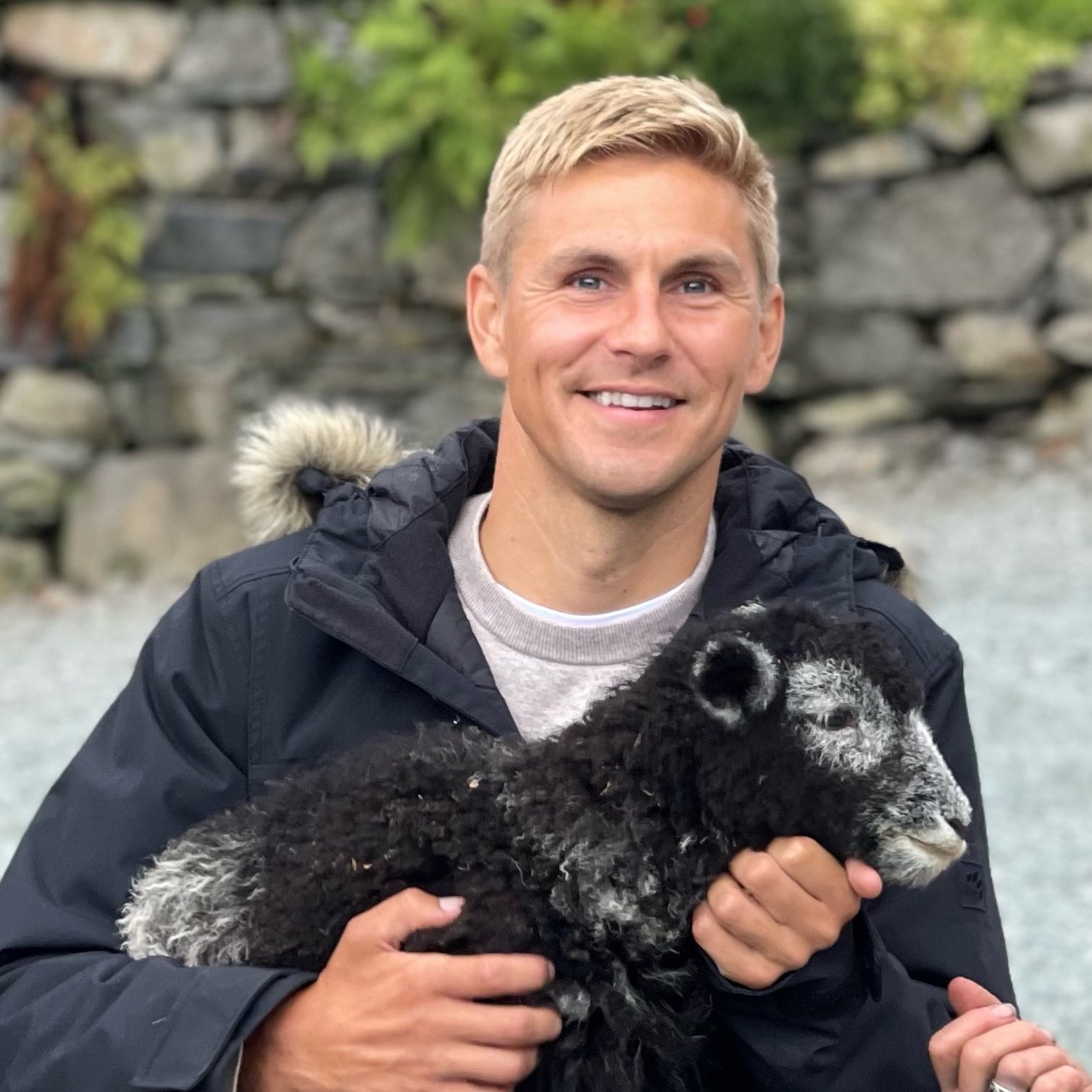
| James (0.09) | Welcome to another podcast from the HealthTech Research Centre in Brain and Spinal Injury. I've been chatting to researchers and innovators and patients and carers and frankly anybody who will spare half an hour to come and share their valuable experiences with us. So I'm really pleased to be joined today by Paralympian, TV presenter, all-round good guy, Steve Brown.
Steve, welcome to the podcast. Thanks for to find the time for a chat. |
||
| Steve(0:36) | As soon as you asked me to be involved in something like this, there's no way I could turn it down. Having the opportunity to share stories, make people learn from my mistakes, instead of making their own, is something that I'm very proud to do and be involved with. | ||
| James(0:53) | And I hope that we'll learn from your successes as well as your mistakes, right? Because that's the way we do things in life. Steve, we met at a dinner, didn't we?
At the UKABIF awards dinner. And we just, we're completely different people, our experiences are completely different, but we just had something kind of in common. I think it's about kind of where we are and how life has changed over time. |
||
| Steve(1:15) | Yeah, I mean everyone's life evolves, doesn't it? Everyone's life changes and, you know, the UKABIF evening that we met at was a perfect example of that because it is nobody that was receiving those awards, no one that had achieved, had done it on their own. And it made me reflect, I don't know about how it made you feel, but it made me reflect on all the people that have had that positive impact on me.
And then sitting there speaking to you as part of the evening was the icing on the cake, realising that my story, although different, had those same threads, had those same people, those energisers in it. And of course, you've got to take responsibility for your own outcome in life. The people that come into your life give you that confidence, that drive, or unfortunately sometimes takes you in the other direction, where maybe they haven't been as positive as they could be. They haven't given you the energy that you needed from that conversation. And it was great speaking to you and realising that I'm not the only person that's had those energisers and sometimes those sappers along the way. |
||
| James(2:26) | Sometimes there's kind of setbacks. I really like what you're saying there about kind of meeting, have you come across this sort of African idea, Ubuntu? I am because of you. | ||
| Steve(2:36) | No. | ||
| James(2:37) | I kind of like that concept, that right, you know, we're not just on our own, we live in this world, we live in this society, and we feed off each other. And you know, my experience is only my experience because of the people that I've met and the people that I've interacted with.
And most of those, most people are good, aren't they? And nice and friendly. |
||
| Steve(2:54) | Yeah, there's no doubt about it. I think the proofs in the pudding, you know, when you go out, generally, people are good. Nobodies perfect.
Everyone's made mistakes. Everyone's done things that they regret. But I think if you look at the heart of man, so to speak, it's inherently good. And when I go over to the shop, for example, you know, the person in front of me will hold the door open for me, being in a wheelchair, they see that it makes my day easier. But then I always think to myself, well, mentally, what kind of day are they having? Just because they've got the ability to get through that door easier than I have. How much would they benefit from the door being held open for them? You know, and I always look at life that way. How can I make somebody else's day better? Because you can't tell from the outside of somebody what's going on inside. And so people try and make my life as easy as possible. I try to make their life as easy as possible. You know, let's make the world go round together. |
||
| James(3:59) | Absolutely. Yeah. A great, great philosophy.
Let's open real and metaphorical doors for each other every day, shall we? So, Steve, let's find out a bit about your story. So some people might have seen you on the telly doing some sports commentary and being kind of a pundit, maybe on Countryfile. And they see this guy, you're in a wheelchair. You are kind of friendly, accessible, engaging character on the TV. We love that. Tell me your story, because I'm guessing you weren't born in a wheelchair, right? Something happened to Steve along the way. |
||
| Steve(4:33) | I went through life able-bodied until the age of 24. And during that time, I was a young lad growing up in Kent. I had a reasonable circle of friends, but I was always about sports.
Everything that I'd done was sport. I didn't go to school to learn. I went to school for lunchtime and after dinner clubs, you know, it was sport all of the way. And I was doing quite well in it. But the thing was, I thought that my success in sport as a young kid was breeding confidence. Now, in retrospect, looking back at who I was and the way that I was, it wasn't a confidence. It was more of an arrogance. And it took me until later in life to sort of realise that. I thought I was showing strength through my sport and I was feeling good and confident about myself. But it wasn't until a little bit later in life, after I went through my education, I started working abroad. I thought I'd do a summer abroad. I went down to the south of France with a rucksack, with a passport, three cans of beer and four pairs of pants. You know, they say about travelling light. I didn't know where I was going or what I was going to do. I was just going to get away from our great country of ours, go and experience a little bit before coming back, settling down as an adult. And I got my first job as a cleaner on a holiday resort in the south of France. And it wasn't about how it made me feel personally. It was where I sort of found this first sense of pride. When people were coming to the resort, it was a family resort, so their children, their parents or carers, whoever was taking them away for the week. I would show them around the place. I would take them to the accommodation that I'd prepared. I would tell them about the sports events I was organising that afternoon. You know, they were happy. And it was there that I realised that as a child, and up until that point, everything I'd done was trying to make me happy. Whereas right here, right now, I was finding happiness through making other people happy. It was a eureka moment for me. I realised how much you could get out of life by putting other people first. I'd done quite well at the job. I got promoted and promoted again before I knew it this summer abroad and turned into a lifestyle. And now I was area manager, looking after 11 resorts in the south of France and Spain. And do you know what? People at home didn't think I'd ever manage anything. And now I'm in charge of their holidays where they're spending thousands of pounds to come and spend a week where I live, where I do manage. It was during that time, I was at a friend's house and I cooked a nice meal for their birthday. And carrying the plates out onto the balcony, I caught my foot and I tripped and I fell off the balcony. That was at the age of 24. And when I landed, I landed on my bum, but I was looking up and my head went backwards over my shoulders and it broke my neck, gave me a spinal cord at C6-7, which means my hands don't work very well. And I've got nothing at all from my chest downwards. And they saved my life that evening. I was in intensive care in Germany for a few weeks, maybe a couple of months. And then once I was stable, I was flown back to England to Stoke Mandeville Hospital where I went through my rehabilitation. And I was told quite early that I wasn't going to walk again. You go to hospital for two things. One is to either get better or the second is to learn how to live with what you've got. And I was there to learn to live with what I've got. My spinal injury was quite a mess, quite a bad break. And some people will have a spinal cord that heals, other people won't. And it was very obvious quite early on that mine wasn't going to heal. So my time in hospital was about learning how to live with what I've got. And so it was very much about rehabilitation over, you know, getting better. And it was hard, you know, I didn't enjoy my time in hospital very much. And then I was introduced to wheelchair rugby and seeing wheelchair rugby was a eureka moment for me. I thought these people haven't been through what I've been through. Look at them with their confidence and their drive. Then I started looking closer and I realised that although I can't move my hands properly, some of them couldn't move their hands at all. Some of them didn't have hands to move. And then I realised that a lot of these people were in worse situations than me with less support than I've got. And I went back to hospital and these people were now my inspiration. I wanted to be like them and forget their disability. It wasn't about that. It was about their drive, their determination, their passion. And I realised that going through my rehabilitation, learning how to get dressed, learning how to do buttons up and hold a knife and fork was all stepping stones to becoming those people. |
||
| James(10:03) | Yeah. That's interesting. Do you think, Steve, that actually you had quite a passion and drive even before the accident?
Were you sort of driven, you know, the reason you made the success of this little trip to France and suddenly you're the manager is because you had that sort of drive beforehand? |
||
| Steve(10:25) | Yeah, I do to a degree. I see what you're saying and I can only agree really. I mean, if you're a nice person and then you have a life-changing injury, you tend to stay a reasonably nice person.
If you're not a very nice person and you have a life-changing injury, well, you know, what about that is going to play positively on your mind? Now, overnight, are you going to become a better person because of your injury? Now, I would like to think that I was quite driven before my injury, but life experiences do change the person you are. It can change your core. You know, I was quite selfish until I started cleaning rooms for other people and that taught me a sense of pride. You know, people's experiences can change the way that they think and I do think that I would like to think that whatever I went through in life, I would try and stay a positive, kind person. But my injury has taught me a lot more about empathy, how other people feel. You can't judge a book by its cover. My sporting experiences have taught me more about how to communicate to people. My time in hospital, when I couldn't understand the doctors, taught me more about body language and reading people's bodies to get an answer from understanding. So, has my spinal injury changed me? Yes, without a doubt, but I think it's changed me for the better, but it's taught me things I didn't know about myself. I don't think that I am now an inherently different person because of my injury, but I think that some of the experiences my injury has given me have made me a more compassionate person. |
||
| James(12:21) | Yes, you've had that kind of learning. I guess in my own case, I've never been particularly driven. A lot of things I just can't be bothered with really.
I did a bunch of work on the TV years ago and it was kind of exciting, but the novelty sort of wore off. I could have been the big TV star, but I couldn't really be bothered. After my accident, I don't think I've got more drive now, but I say yes to more stuff and seize opportunities when they come, and I probably wouldn't have done that so much in the past. |
||
| Steve(12:53) | No, I see. I love that. Do you know why?
I think it's because, like me, it's quite quite strange, isn't it? You can speak for yourself, but I'd like to think there's a mirror here where you go through your life-changing moments, and with ours being big injuries, it puts you on your back foot for a little bit. You're nervous. I'm sitting there thinking, oh, I don't want to go out in public in a wheelchair. You're thinking, what are people going to think of me, you know, with my eye patch and all of that kind of thing, and your confidence goes backwards before it goes forwards, but then you start to think, well, I've been through worse situations than going out in public. I've been through harder times than going out for a meal. |
||
| James(13:37) | It's interesting how you've sort of broken that down. I've been through worse times than going out. You haven't been through worse times than being paralysed in a terrible accident.
That's like the low point, right, Steve? And yet, actually, your mental attitude to that is not to look back at all the terrible things that have happened and what you've lost, but actually, where am I now, and how do I move forward and make a success of the new Steve? |
||
| Steve(14:07) | Well, that's right. Do you know, I had a real epiphany moment while I was in hospital. There was twice that I cried in hospital. The first time was because despite what all the doctors said and what everybody was, you know, you think, I'll be the miracle.I'll be the one that walks. And then I got measured up for my first wheelchair, and it said at the top of the form, Steve Brown, non-walker, and that was it. You know, my dreams were dashed.It was there in black and white, and I burst into tears with a realisation moment. You know, my life has altered, and it's going to stay this way. The second time that I cried was I went to my room. I was feeling peckish, so I picked an apple up out of the fruit bowl, and as I turned round to go back across my room, the apple rolled off my lap underneath the bed, and I couldn't get the apple. The realisation moment of what not being able to walk meant, it wasn't about putting one foot in front of the other. It was about how I was going to interact with the world.How was I going to interact with other people? How was I going to interact with moments in life, not walking in life? And I completely fell apart by not being able to reach this apple. Do you know, the cleaner put their head around the corner. Don't forget, I was in hospital for seven or eight months by now. Steve, this isn't like you. You know, you said the cleaner, Lou, her name was amazing. I said, I can't reach my apple. She said, Steve, Steve. She walked in. I thought she was going to give me a cuddle. She walked straight past and went to the fruit bowl. She said, there's two more apples in the fruit bowl, Steve. Why are you worried about that one? And I now use that as a metaphor for life. You know, think about what you can, think about what's achievable, move your goal posts, change your apple if you need to, but go back and check what else is in the fruit bowl, because there's other apples, there's other options. |
||
| James(16:02) | I like that. I hope you're going to start the t-shirt line now where there's more apples in the bowl, right? Because I'm buying one.
So let's carry on with your story, because you've just sort of casually mentioned, oh yeah, wheelchair rugby, that would be exciting. But you didn't just join a little Sunday afternoon wheel around the park thing. Tell us what happened with your rugby career. |
||
| Steve(16:22) | Well, so I went down and watched this game while I was in hospital for that first time. And I sort of had this realisation moment that there's people playing wheelchair rugby with far less ability than me. And you know, you're watching these big hits and these crashes and you know, you're in awe of them.
Or I certainly was. Anyway. I thought to myself, right, let's get through hospital and I'm going to go down for a training session. I went down for my first training session two days after I left hospital. And you know what it's like meeting new people for the first time. Am I going to fit in? Am I going to be wearing the right clothes? Am I going to look stupid? Am I going to make a fool of myself, say the wrong thing? I had all of those worries and a hundred more. But you know, never underestimate what a handshake or a smile or a nod can do. Because those guys and girls that were at training that day, they knew I was scared and felt out of my depth. And they just made me feel welcome within seconds without even talking to me, a lot of them, just the eye contact and the smiles. And they'd all been through what I'd been through to one degree or another. I've never been in a room that understood me as that room did. It wasn't about the sport at first, it was about the people. I went back for a second time because of the people, the third time because of the people. But hang on a second, I'm starting to get quite good at this now. And the same as any teams, any leagues, any sports, you've got teams go up the leagues and down the leagues and players then get asked to play for better teams if they're good. Anyway, so that went on over five, six years. And then I was asked to go to a Great Britain training camp. You know, my name was being read out with some of the best names in the country, some of them the best names in the world. And, you know, I'm in that same breath. Fast forward a few years and London 2012 comes along and there's 24 of us in that squad. And out of the 24, 12 of us are going to make it to be part of the team going to London 2012 Paralympics. And I can remember the day of selection, my phone's flashed up, Coach Tom. I've answered the phone and I was so nervous. I was banging on my head where I was shaking so much. And he asked me to be part of the team going to London 2012. And he said, you know, furthermore, “Steve, I'd like you to be captain”. And I said, “what coach? When was the last time somebody said to you, do you know what, your people skills are off the chart. When was the last time somebody said to you, your attention to detail is second to none. But without attention to detail, you can't learn. And that's what gives you your grades and your percentages. If you haven't got people skills, you can't work in your teams, which gives you the team goals and outcomes and all of that. You know, they're the fundamental blocks that make you who you are. And so, of course, I said, “yes, I'll be captain”. And the pride for me didn't come from being captain of the country. It came from being captain of 11 people that trusted me on the hardest or most important time of their lives. And some of those people were the ones that inspired me and got me through the hardest time of my life. You know, that was where my pride come from, trusting me. It wasn't about being captain of the country, it was about being captain of those individuals that really, really stays with me, with my pride. |
||
| James(20:08) | So you're at the Paralympics then, London games as well, hugely important to be on home ground, I'm sure. Was that a kind of moment where you thought, this is the new Steve, super Paralympian. The man, right? Or actually, was it more sort of gradual through those years of training that you suddenly had stopped being Steve the holiday rep and now you were Steve the Paralympian? | ||
| Steve(20:33) | It's all reflective, isn't it? It's only when you look back at life that you start to realise where and when your changes were. As you're going through them, you don't think, oh, I'm now a better person than I was yesterday.
I'm a more thoughtful person than I was yesterday. It happens years later when you think about your progression through life, however you want to measure success. It was after London, training for Rio, another four years of being told what to eat, what time to get up, what time to go to the gym, what to lift at the gym. Your life's dictated to you. You've got a team of people doing everything they can to make you the fittest, strongest, healthiest athlete that you can be. And you have to listen to them. So that's what I did. Another four years of being told how to live, essentially. But then I busted my thumb at a training session, last training session of the year. My hand was on the wheel, my arm and my handle went forwards, but my thumb got caught on the wheel. And that injury actually meant that I lost my place in the team for Rio and I lost my captaincy. |
||
| James(21:43) | That must have been devastating. You spent time training, you've had the great success in London, and then the rug is pulled away. | ||
| Steve(21:51) | Yeah, and it was crazy because I have spent the last 10 years reinventing myself as this Paralympian. I had to change my job, I had to change where I live, I've got a spinal injury, I found something new to focus on. Mentally, that thumb injury affected me as much, if not more, than my spinal injury.
I've already reinvented myself once. You know, what more can I do? What more can I give? And I was out speaking to my brother about it. You know, and he's telling me, oh, you've bounced back from bigger things than this, you'll be okay. And I was arguing with him, like, what do you know? As if it was his fault. |
||
| James(22:37) | Nice, thanks for reminding me. Cheers.” | ||
| Steve(22:39) | That's right, you know, it's only been 24 hours, I haven't even told my mum and dad yet, you know, I don't want to let anybody down.
I said, I'm not doing interviews or anything just yet. They said, “Steve, it's not about an interview, we're offering you a job, if you can't go as a player, I'll come as a pundit and as a presenter, tell us what you know about wheelchair rugby and other Paralympic sports. No one knows more about it than you.” So, of course, I said, yes, and I'm telling my brother my first piece of good news. I get another phone call, this time it's the BBC. Steve, we understand you're being dropped from the squad, you're not going to Rio. I was like, no, I'm not, how can I help? You know, and all of a sudden, my attitude has changed, you know, my dynamics, my mindset has changed. I spent all that time thinking that I was looking and gunning for these medals. What I didn't realise is that over those 10 years of trying to get those medals, I'd become more compassionate, I'd become a better leader, I'd become a better communicator, I could work better under pressure, I was a better prepared person, I wasn't scared of putting hard work in. All of these things come as a by-product of trying to get medals as an athlete. And it was those skills, not my skills as an athlete, not how good I was or how fast I was or how accurate my passing was, it was the skills that I had learned that then gave me the platform to then go on to be a team. |
||
| James(24:01) | And I guess, you know, you've met the people who work for these TV companies, you've done some interviews while you're playing, you've got a relationship with people and they're like, he's a nice guy, he looks good on the telly, right? So you go to Rio, I can only imagine that that must have been really difficult to sit and watch your teammates and there must have been a part of you, Steve, that's like, I should be down there on the field. |
||
| Steve(24:26) | You're completely right. The amount of times I was meant to be commentating and, you know, another game, Canada versus America, USA versus Switzerland, whatever it may have been, you know, I was there, I was in the moment, my commentary was good, I was talking people through it at home. Great Britain played and I just went quiet.
I was so in the game and so like on that court with them that I kept forgetting that I was live on television. My co-commentator had to keep tapping me to get me back out of that zone, Steve, you know, tell us what's going on or keep it all to yourself, you know, and it became a little bit of a running joke. But what was great is that the people watching, they saw a guy that cared, they saw a guy that was invested and they knew that my passion wasn't just words, it wasn't just a ‘I can talk about this sport’, they could tell I cared about this. |
||
| James(25:32) | Yeah, it's really interesting to me the way you've described that, Steve, because my first reaction is that you'd just be really jealous that you couldn't be in it, but actually what you're saying is you felt like you were in it, you were still part of that team, you might not have been on the court playing the game but you were with the guys, right, doing the thing. | ||
| Steve(25:51) | It wasn't jealousy, I thought it was going to be jealousy, it wasn't jealousy at all, it was those friends, those people playing, I had broken bread with, I had been side by side in some of the hardest situations that they've ever faced in life, you know, we together had got through some of the trickiest moments that God can throw at you sometimes and it was that that took over, it was I care about these people, I want them to get what they deserve, very quickly it went from I wish I was there to those people are there and I want it to go right for them, you know, and I cared with all of my heart and I was still laying awake in between their games at night thinking how are they going to do tomorrow, what's going to happen tomorrow, the same as I would have done when I was captain, right, how are we going to do tomorrow, what are we going to do tomorrow and but it was that that actually won me over with the audience quite well, they could see that I was a caring guy and then the BBC, they said to me, Steve, like it was great the commentary, we could see how much it mattered to you, is there anything else you care about and if I wasn't playing sport as a kid, I was out in the countryside, my dad was a great, great guy for this in terms of enthusiasm, we was not farmers by any stretch of the imagination but where we lived was right on the edge of town, I would go out my back door and through the alleys and I was up towards the school in the middle of town or as a kid, I'd go out the front door and we were straight opposite the fields, as many farmer friends as I did, you know, townie friends so to speak and I used to help out with the lambing during the spring and you know, every time we took the dog for a walk, it was an adventure, it wasn't just taking the dog over the field, my dad would fill me with the right enthusiasm, “oh dad, dad, there's a ladybird”, “oh great, what colour is it, how many spots has it got,” you know, for this excitement that the natural world can bring you, so I told the BBC, you know, wildlife is something that I'm hugely, hugely, hugely passionate about and care about and today, more than ever, it's got me through some of my hardest times, going out and taking my way, taking myself away and a bit of escapism after my injury, finding my own space and solace and that kind of thing and they said, “well look, if you're that passionate about it and you're going to show that same passion as you did for sport, let's get you involved in some wildlife stuff”, so that's how I started with Country File and a little bit on Spring Watch and then it was amazing how it all started to unfold, I then won Best New On-Screen Talent, you know, it was my first year of doing TV work because of how I came across, I guess, you know, and how I related to the audience and now I've become a TV presenter for TV presenting's sake. | ||
| James(28:59) | Yeah, a new role, a new kind of Steve identity but what I'm getting, the thing from our conversation that actually whilst on the face of it, you were sort of a holiday manager, you were a Paralympian, you're a TV presenter but actually I see the same Steve through all of those things and it's not like any of these things have just happened to you, you haven't got lucky that someone from the BBC phoned you up, you haven't got lucky that they said, oh do you want to do something on the countryside, you made those opportunities happen by being a kind of nice engaging guy, right, and doing the things that we started this conversation talking about, about thinking about other people and having that empathy. | ||
| Steve(29:40) | Well, do you know what? I do a lot of mentoring, coaching, public speaking, that kind of thing. And one of the things that I often say is that, you know, there's three ingredients to success.
One is you need to have a skill, something that you're good at. But that on its own won't carry you. You need to couple that with hard work because there'll be other people with the same level of skill that are very willing to work hard. And the third thing is you need opportunity. You know, you could be the best singer in the world, but if you only do it in the shower, you don't give yourself the opportunity to be heard. You could be the best footballer in the world, but if you don't try, if you don't work hard at it, you're never gonna make it. You know, you need those three things. And I think that I work hard. I'm not scared of working hard. And I've been very fortunate that through life, I've found things that I was able to do. And with other people's support, coaching, and expertise, I've managed to go on to do very well at them. And that's when I've had my opportunity to be seen and to be recognised. And it's only when those three things come together. And this is why I talk to people about going outside your comfort zone, trying hard, putting yourself in front of people that you don't know, because you need to make opportunity. You need to find the confidence to go outside your comfort zone, find new people, and, you know, for me, I think to myself, how am I gonna better myself? How am I gonna be better than I was yesterday? And do you know what? My best friends are great friends, but they're never gonna help me become better. I have to leave my best friends because my best friends are rubbish at wheelchair rugby. I play wheelchair rugby with other people. Some of them I've made lifelong connections with, some of them not. You know, we've all got different backgrounds, different ways of living. But one thing we all had in common was wheelchair rugby and wanting to try hard at it. And that's enough for me. And if it went well, I'd go back and celebrate with my friends. If it didn't go very well, I'd go back and my friends would put an arm around me and give me the confidence to try again. But if you don't leave that circle of friends, you don't grow, you don't develop. And so now, me, I just boomerang in and out, go and find some people that are gonna help me get to where I wanna be in life and then go back to my friends and celebrate about it. |
||
| James(32:22) | Where's next, Steve? Are you happy where you are at the moment? Have you got a sort of mission this next or is it just, well, see what happens? | ||
| Steve(32:31) | Well, I've got my 16-month daughter now. Me and my partner, Becca, we're in a real good place with that. We tried with IVF for around four years.
So it was a long time coming, very stressful, very worrying for both of us. Of course, Becca went through an awful lot physically as well as mentally for us to get Lyra. Lyra's amazing. And now, do you know what? All I'm trying to do is be half the dad my dad was to me. My dad was awesome. You can't take your family situations for granted. Everyone's got different families. Everyone's got different support systems, different friends. And I know how lucky I am to have what I have. I'm the oldest of four brothers. My other three brothers all live quite local. We're all on each other's doorsteps and I love that. And did you know what? It's quite funny because after my injury, I felt I lost my place as the big brother because I was now having to have a lot of help and support off of them when I was first injured. But now through confidence, through paving my own way, through working hard and finding those opportunities and those skills, I've managed to not just go out into the big wide world and achieve. I feel like I've got my place back as the big brother again. You know, they're back to coming to me for help and support rather than me going to them. And it feels great. My family at the moment, little Lyra in particular, aware I'm putting my efforts in and just trying to be the best dad I can be. |
||
| James(34:12) | I'm sure you will be. She's a lucky girl. And I just sort of, you know, word of advice, parent to parent, first 18 years are the hardest.
After that it's just a sort of general worry. |
||
| Steve(34:24) | Great, got it. Well, you know, I've only got another 16 and a half to go. Like you say, that general worry when they're running around.
And of course, like being a parent in a wheelchair as well, that comes with its issues and tricky bits. And for a long time, I was very worried about that. And there are things that I can't do as a parent, whether it's when Lyra was newborn. You know, I can't reach over into the crib to pick her up and get her out. And so that all fell on Becca. Now me, now as the male in the relationship, I'm feeling like I'm letting Becca down and that I'm not fulfilling my fatherhood role properly and that kind of thing. And, you know, like having Lyra as a newborn baby was one thing, but having Lyra as a dad in a wheelchair with a spinal injury was tricky, but you find ways to adapt, ways to overcome. And Lyra is the thing that has done that more than me. She knows that if I want to pick her up, she goes to anyone else with her arms up or they pick her up underneath her armpits, carry her or whatever. I put my arm to the side of me. She flops over it with her arms. I pick her up on my arm, up onto my lap. She's the one that's adapted. One that's, you know, grown the smarts to have a dad in a wheelchair. You know, she's the one that is working hard to adapt to me. And it's second nature, you know. |
||
| James(36:07) | Yeah, it sounds amazing. And, you know, there's a little girl who really wants a cuddle with her dad, right? She's going to learn how to get that because that's what you need.
So we've had Steve, the passionate young man building the career in the holiday industry. We've had the Paralympian leading the team to the games and playing across. We've had the TV presenter, the charming, cheaky chappy on the telly that everybody loves. And we've got Steve, the parent. And it's just been an amazing pleasure to talk to all of you at the same time, Steve. Thanks ever so much for joining the podcast. Really appreciate it. |
||
| Steve(36:44) | The pleasure's mine. Thank you so much. |
More like this:
Innovation Podcast – Eye Focus
James talks to Stephanie Rossit about spatial neglect and a new app designed to help the many [...]
Confidence, Crisis, and Comeback – A Conversation with Elizabeth Manuel Bayleigh
Listen to Elizabeth Bayleigh, Chair of our Public Oversight Committee, talk about her journey as a patient [...]
Restoration and Rehabilitation Theme Podcast
Listen to our Restoration and Rehabilitation Theme Lead, Professor Valerie Pomery, talk with James Piercy about our [...]