
>
| James (0:08) | You are listening to a podcast from the HealthTech Research Centre in Brain and Spinal Injury and today I'm really pleased to be joined by Sharon Buckland who's Head of Brain Injury Services at the Child Brain Injury Trust. Hi Sharon, thanks for joining me on the podcast. | |
| Sharon (0:24) | Hi James, thank you so much for having me, it's great to be here. | |
| James (0:27) | So, child brain injury, quite a lot of the time we might think about brain injuries as being things that affect adults and older people, strokes certainly, we automatically tend to think about elderly people but we know that even that can affect young people. So what kinds of brain injuries are we talking about with children? | |
| Sharon (0:47) | Absolutely, I think it is something that many people don't think about with their children growing up, until it reaches their lives, but brain injury, it's not common but it's more common than people might think. So we're looking at around 40,000 children and young people a year acquiring a brain injury and some recent research by Dr Hope Kent has found that you're really looking at one child in every classroom is likely to have experience of acquired brain injury. So it is something we should be thinking about and having awareness of which is what we try to do here at CBIT. | |
| James (1:22) | Yeah, so one kid in every class is a lot and presumably their experiences are going to cover a whole range. There'll be some children who are never going to go back to school, for example, and there's others who actually might return to the classroom really quite quickly. | |
| Sharon (1:38) | Absolutely, and everything in between. So some children, just as with adult injuries, may be significantly impaired, they may have a complete life change, but there's a huge population who are sort of like more that walking wounded, if you like, where the hidden disability is really, really strong. Many of our children and young people return back to their mainstream school rather than a special educational provision and it's for these children where a lot of work CBIT do because they don't have the structures around them, the services around them, because, you know, they're walking, they're talking, they're sort of like getting on with life.But once you're back in that educational setting and you get those demands of the classroom, things can start to unravel a bit for those families. | |
| James (2:29) | Yeah, and I guess with the kind of behavioural issues that sometimes we see after brain injury, an inability to concentrate and plan, you might be picked out as the naughty kid? | |
| Sharon (2:41) | Oh, absolutely. Yeah, we sometimes hear those stories, unfortunately, of people being expelled, actually being excluded from school based on their behaviours that are coming from their ABI struggles. So we do a lot of awareness raising, we'll go into schools and actually train staff on the presentation of the injury and awareness with the peers as well, so that the peer group can have an understanding of how somebody might be presenting, especially if they're going back to the same classroom and they've got this kind of before and after.Jack used to sit quietly, now he struggles with that. So it's giving that awareness and that understanding so that people can approach these situations with compassion. | |
| James (3:27 ) | Really important work. How much awareness is there with brain injury amongst kind of people who work in schools? If there's one in every class, you'd think that all the teachers have seen this a dozen times in their careers. | |
| Sharon (3:41) | You would think so. | |
| James (3:42 ) | Is there actually still kind of a lack of awareness and understanding? | |
| Sharon (3:44) | Yeah, I mean, unfortunately, the answer to that is yes, it's not in standard teacher training, for instance, you know, they learn a lot about neurodiversity, but not about brain injury. But even if it was, that would be sort of one lesson or module in a whole section, and so it can very easily be lost. And I think it's because if you've got 40 children and one of them has a difference that is not evident, it's not the sort of like whole workings of the classroom, it's very easy to lose that and not see it, you know, and just not have that understanding.And so, yeah, that's sort of like a big piece of work that is getting better. It certainly is. And we run professional workshops for free, so a lot of teachers and educational staff will come on those to get a better understanding, but unfortunately, it tends to be after the fact.
So it's once they've had a child with a brain injury in their class, they're like, oh, okay, I need to think about this. So it's capturing those so that they're ABI aware, and they're looking at behaviours, particularly if children have come back from maybe a concussion, and they haven't necessarily got a diagnosis, they can look at behavioural changes and just ask that question, is there an ABI? |
|
| James (5:04) | Yeah, and to get aware of that, and I guess school is full of change. So every year you probably have a different teacher, you might a couple of times change school. And so does information get passed on with that child as they grow and kind of go through their education career? | |
| Sharon (5:23) | Unfortunately, it is a bit hit and miss. And particularly, there's a big transition between sort of the primary and secondary schools, that's sort of the biggest that we would see. It is dependent on individual staff, there isn't like a system that carries these children through.If children have been able to get something like an EHCP, which is an educational and healthcare plan in England, or statements and Scottish variations, then the idea is that that will carry through with them. But it's quite a flawed system and dependent on those individuals taking that time and energy to support that transition. | |
| James (6:03) | Yeah, and there's been some talk about abandoning whole EHCP thing in schools, which shakes head in despair. Really hard to get. But once you've got one in place, they do offer really quite a good support system, don't they, for young people? | |
| Sharon (6:17) | Yeah, because it sort of gives that framework and that sort of legal basis, really, to the school to say, you know, these are the rights of this child. And, you know, they need this to be able to support their education, just like everybody has a right to that education. So yeah, the SEN stuff going on at policy level is slightly worrying for all of us.But we try not to get too caught up until there's some proper information out. | |
| James (6:47) | So Sharon, we know we've got all these children in class, some of them might get this EHCP classification. But how is brain energy recognised? You said it's not something that teachers do in training. | |
| Sharon (7:01) | Yeah, well, unfortunately, it isn't recognised. So in our educational systems at the moment, teachers will record the presentations of children in their classes for autism, learning difficulties, ADHD, there's no category for acquired brain injury. So we're really blind to exactly who is in the classroom and the prevalence.So, you know, some great research is going on to try and capture that. But we could make it so much more simple and evident if we just had that categorisation. But currently, our ABI children are sitting more sort of under learning disability categories and data.
So we can't make those really important changes, particularly at policy level, and we can't see what the problem is. |
|
| James (7:46) | Yeah, we can't kind of capture those numbers because they're recorded under any number of half a dozen different categories. | |
| Sharon (7:52) | Yeah. | |
| James (7:53) | The other thing that's happening more so in children, young people than adults is that they are changing. So we know that when people hit puberty, there's this big kind of neural pruning and brains rewire themselves, reconnect. So do we see changes in the way that brain injuries show themselves as people kind of get older? | |
| Sharon (8:13) | Absolutely. It's something that's often termed the sleeper effect. So that's a big difference between sort of an adult acquired injury and a paediatric acquired injury is that the injury will happen and the impact of that is not often evident straight away.It takes these developmental milestones to appear to then be like, ah, OK, you know, a child might not have immediate problems with abstract thoughts or complex problem solving because it's not in their developmental progress at that time. But as they mature, then you can start to see if those skills have been affected. So the injury was always there having that impact.
It just takes a while for it to show itself. And adolescence is an absolute minefield for that because, of course, adolescence is messy. It's messy anyway. So it's unpicking what is kind of typical adolescent changes and behaviours and what is sort of being impacted by an earlier injury or an injury that's happened during adolescence. Yeah, unpacking that is really, really tricky. |
|
| James (9:25) | And I guess in some cases, the injury might even have been forgotten because it was 10 years ago and there didn't seem to be any trouble and they've kind of done all right. And then suddenly we find this quite dramatic shift in the way that they manage to cope. | |
| Sharon (9:40) | Yeah, that's absolutely right. And that's why it's sort of like the information sharing and following through with families is so important and why we don't discharge our families if we've done a piece of work with them. We remain and we will remain up until about 25 to support transition into adulthood because it's not something that you just kind of, all right, you've had the injury, you're back home, you're back in school.So now you know what you're doing. It will constantly evolve and throw up different challenges as that child progresses through their development. | |
| James (10:20) | That leads us in a beautiful segue onto the challenges for families who have to manage that transition and see their child changing and often struggling with that kind of progress. | |
| Sharon (10:33) | Yeah, it's incredibly challenging. Our families just wow us with their resilience daily because they have to be their child's biggest advocate all the time. Because there isn't this big label of what's going on behind the skull for everybody to see, it's left a lot for parents and carers to be that voice for their child.And quite often children can mask a lot at school. So there can be a bit of a different narrative between what schools are saying are problems and challenges and what home are saying are problems and challenges, whether that be behavioural, academic or fatigue related. So it can be sometimes we see there being a little bit of a battle between families and educational staff, which is where we can come in and do some mediation around that.
But families really are just the absolute linchpin around that child and really provide a lot of support over and above really. |
|
| James (11:36) | And it must be really difficult. You know, I'm a parent, I can only begin to imagine what it would be like to suddenly have your world thrown up in the air because your child has suffered some kind of brain injury. I was speaking to somebody a while ago and they're saying that obviously hugely traumatic that this young person who you love is now disabled, can't function the way they used to.But also, you've now got to navigate benefits system and you can't work and you used to and a huge range of things, whole life for the whole family just gets kind of turned upside down. | |
| Sharon (12:13 ) | Yeah, and of course, brain injury doesn't ever, you know, just fall into a completely calm situation. There'll be other siblings, they may have additional needs themselves already there. You've got the financial pressures, you've got the education system might be changing, you might have to do adaptations to your house.And it's just, it's keeping all of that together whilst, you know, being the breadwinner and needing to be at the hospital. It's incredibly complex. Our families go through a complete and utter life change for so many reasons, even in sort of the most straightforward of circumstances as well. | |
| James (12:57) | And is CBIT there to help support those families, are there kind of resources and things that I can point people towards to kind of find? | |
| Sharon (13:04) | Absolutely. Well, we're actually based in 17 hospitals and major trauma centres across the whole of the UK. But we've got a dedicated team of coordinators who work in our community, our hospitals and virtually.So if you're not near a coordinator, we're always at the end of the phone. And we are about to launch a brand new website, which has got sort of upgraded information, fact sheets, self-help guides. And so we're really sort of developing that virtual resource as well so that however people need to access us and however people feel that that support works best for them, we hope that we can meet it. | |
| James (13:46) | That's great. And links to some of those things underneath this podcast, do check them out. Something else that kind of worries me a bit, Sharon, when I've met parents of young people is that I seem to meet the ones who are really proactive and it's really hard work, but they're fighting for their children.And I'm just always concerned about the people that we don't hear from. You know, there are people who just nod when doctors say anything and won't question it. There are people who perhaps are illiterate.
They can't write a letter of complaint. They can't fight and argue. Do those people get missed or do organisations like your own kind of help to scaffold and help those people fight for the things that they need? |
|
| Sharon (14:33) | Yeah, we are big believers in empowerment. So in sort of like the early intervention service, we do a lot more sort of like strong support and handholding for want of a better term. But as the families progress into back into life and back into the community, it's all about how are you going to do this?You know, we will help you have the tools to be your child's advocate because it is a learning curve for everybody. And they've not done this before. We see it every day, but this is their first experience of this.
And we experience lots of families that don't have English as a first language. So we know how hard it is to understand the medical speak, take the language barriers into that. And it's like being in a completely isolated world. So we do work around sort of translating of fact sheets and resources and making sure that people can understand what's going on for them. Brain injury, unfortunately, is really prevalent in those that might be from a lower socioeconomic status. So we support a lot around grant funding and helping people sort of make sure they've got their basic needs met so they can then provide that care and support for their family because these are all weights off their mind, you know, just knowing that they can, you know, the fridge is going to be working for the medication that that child needs and things like that are really important pieces of the puzzle. And yeah, it's very, it can be a very fluid and flexible service because no family presents with the same demographics. |
|
| James (16:14) | Yeah, absolutely. Every brain injury is different and every family is different. It's interesting you're talking about people with poor understanding of English, it might have been the child who was the translator for the family. | |
| Sharon (16:28) | Absolutely. Yeah, yeah, that absolutely can be the case. And so like making sure there's ways that that family can still feel included in this journey and understand what's going on for their child is a challenge. | |
| James (16:43) | It's all sounding terribly negative. And it is clearly it's a very traumatic thing for everybody involved. Is there a kind of flip side?Are, for example, are you more likely to make a better recovery from brain injury if you have it when you're younger because you're still growing and maturing? | |
| Sharon (17:04) | Yeah, so there's a it's a bit of a kind of, I guess, urban myth that a child brain injury, their brains are all plastic and they'll just bounce back. So if you're going to have one at some point in your life, have it before, you know, 22 or whatever and you and you'll be all right. And this kind of really comes from research back in the 30s that was taken out of context.And we know now that that's not the case, unfortunately. But what I would say is children are, they're neural expectant. So they their brains are in a time that they are looking to learn and looking to for those synaptic connections to get going.
So it's a hungry brain for learning. So in that sense, we can utilise that. But say because of the sleeper effect and the way that we don't, the injury will have that impact that will remain. And it's just such an unknown trajectory. And obviously, ABI prognosis is always fairly unknown. But for children, it really is such a stab in the dark. You know, you just can't say where if a child has an injury at three, where they're going to be when they're 20. Because we've got to figure that out as they develop. |
|
| James (18:24) | Really difficult. Yeah. And I guess there's an issue about insight in younger children as well.We know that's a problem with lots of adults after brain injury don't really understand the impairments that they've got. Is that the same in children? Is it more pronounced because they still probably don't understand the world anyway as it was before? | |
| Sharon (18:42) | Yeah, exactly. And there's sort of that younger category as primary children, I would say they, they're a lot more role with the punches a bit more with it, because they're not a fully formed identity. And they're not like, oh, but this is who I am.You know, they don't have that really strong sense. But we certainly see even from sort of like seven, eight year olds will have that identity shift and will really have that insight to I'm not the same as I was, or I feel different to my peers. And so there's still a lot of that sort of wider effects that we sort of think about that we need to address and acknowledge.
So we do a lot of work at CBIT sort of thinking about how we can get young people together, how we can create peer group spaces so that they can feel a part of something can relate to other people on exactly the level they're craving for. |
|
| James (19:33) | Yeah, it's really important, isn't it to find somebody who gets it, right? It's someone who's shared experience. Yeah, not going to be your mum and dad, however much you love them, and they love you.it needs to be somebody who's in a similar position to you. | |
| Sharon (19:47) | Yeah, yeah, absolutely. Absolutely. But you know, thinking about positives, we see like the resilience and the determination of our children and young people is, is a sight to behold and sort of working with the NABLES group from UKABIF and their young people group, who are just the most incredible individuals who have gained so much from their journey and are using it in such a positive way.And for the for the good of everybody, you know, it's it's really appreciable. | |
| James (20:21) | YEABABI they call them. | |
| Sharon (20:24) | Absolutely. | |
| James (20:25) | Yeah, and I had the great pleasure of meeting with with four young women from that group talking about their experience of getting back into education or going to university. inspiring.To kind of hear them speak and share that and they're doing a lot of work to help pave the way for the next group coming through because it's not like we're going to mend this overnight. | |
| Sharon (20:51) | Yeah, yeah, absolutely. | |
| James (20:53) | Well, Sharon, thank you ever so much for sharing your thoughts. As I said, I will put a bunch of links to some of the things that we've discussed in this podcast chat. And if you are the parent or a relative or friend of somebody who's been affected by brain injury, do check out the website for CBIT because there are a whole range of resources and links and stuff on that website, which will help you out.Check out other episodes from our podcast. You will find there's over 20 now where I'm chatting to other people who are interested in brain and spinal injury. We hear from patients and carers and innovators and researchers and support groups like CBIT.
Thanks very much. |
More like this:
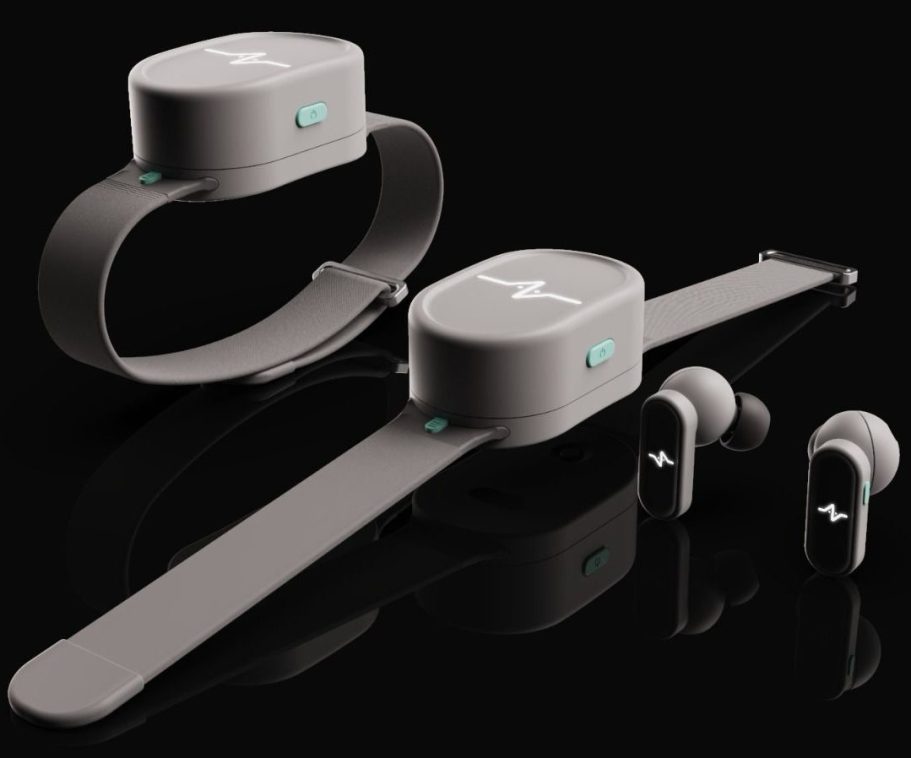
Innovation Podcast – Knitregen
James talks to Laura Salisbury from Knitregen about a new device which hopes to improve hand and [...]

Research Podcast -Music therapy
Alex Street talks about the role of music in recovery from brain injury Cambridge Institute for Music [...]
Innovation Podcast – Neuroguard
James talks to paramedic Steve Purdy about a new device used with brain injured people in amblulances [...]