

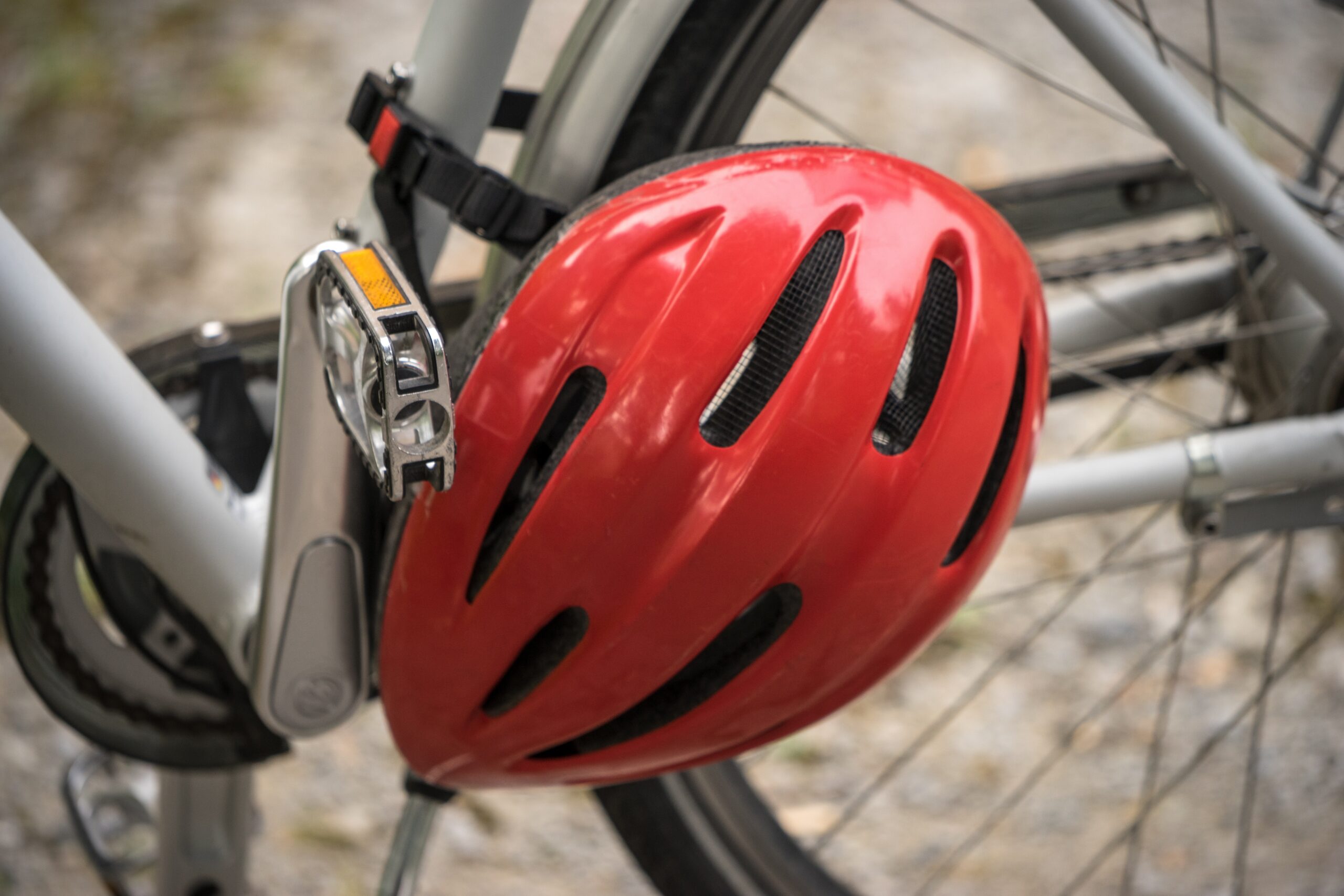
>
| James (0:08) | Well done, you found us, you're listening to a podcast from the HealthTech Research Centre in Brain and Spinal Injury. You will have listened probably to at least half a dozen episodes where I talk to really interesting people about the work they're doing around brain and spinal injury. And today I'm joined by Mazdak Ghajari. And Mazdak, you're an engineer, is that right? Is that how you describe yourself? | |
| Mazdak (0:29) | Yes, yeah, I am. I'm an engineer with a background in mechanical engineering and now my research is very much focused on biomechanics of traumatic brain injury. | |
| James (0:39) | Yeah, so engineering- brain injury don't seem obvious bedfellows at start, but I guess really important in understanding how injuries happen, the mechanisms that happen in the brain and in the head when they happen, and also how we might prevent those injuries from happening in the first place. | |
| Mazdak (0:56) | Yeah, exactly. I think specifically talking about traumatic brain injury, it's a type of injury that is caused by mechanical forces. And that is where engineers are relevant because we know what are the forces, how we can measure them, how we can even simulate in order to predict these forces.So yes, we can actually help bridge between the initial insult, which can happen in several applications like road traffic, sporting, conflict, and the resulting injury in collaboration with, of course, with neurologists and neurosurgeons. | |
| James (1:33) | And is there a really simple relationship? The bigger the force is, the worse the injury? Or is it a bit more subtle and nuanced than that? | |
| Mazdak (1:40) | I think both. So it depends on the type of injury. So brain injury is not one thing.It's really made of different types of pathologies. So if you're talking about the type of injury that initially engineers focused on, it's skull fracture. The reason they focused on the skull fracture is that like 60 years ago when there was no airbags, when people were not wearing a helmet, in road traffic collisions, they would see a lot of coexistence between skull fractures and brain injuries.
And therefore, the hypothesis was that if we reduce the severity, the risk of skull fractures, we can as well protect the brain. Nowadays, this is not the case because now we have airbags around, we have helmets, there's so much protection. So the type of injuries that have now slightly shifted. Our attention shifted from the injuries that are directly linked to the force to injuries that are a bit more complicated, like the ones that are caused by rotational forces. |
|
| James (2:44) | Yeah, so I was in a car accident. That's where I got my brain injury. And I suffered diffuse injury caused by twisting, really in rotation.So we know the brain isn't fixed to the inside of the head, so it can kind of rattle around inside there. And it's those shearing movements that can cause damage, isn't it? | |
| Mazdak (3:01) | Absolutely, absolutely. We have known now for a few decades that shearing forces and rotation of the head, these are really important mechanisms of brain injuries specifically related to diffuse brain injuries. And as well, we know these are some of the most complicated ones. | |
| James (3:20 ) | Yeah, and the impacts of those can vary enormously between different people, as well as different kinds of accidents and injuries in the first place. | |
| Mazdak (3:29) | Yeah, absolutely. And I think these are as well the type of injuries that we start to see more as well in a sporting context. And I should make it clear that in road traffic collisions, we may see higher severities of these injuries.But we should know that the level of force, I think where you started from that if the force is lower or higher, of course, there will be different severities of injuries. Sometimes there could be just a symptom, and then after a while, the symptom will go away. Or sometimes the force can be so high that it can trigger some irreversible damage. | |
| James (4:10) | The best thing we can do to treat brain injuries is to stop them happening in the first place. So you mentioned some big kind of things in terms of prevention, seatbelts. I mean, they must have made a huge difference, a huge reduction in the number of kinds of injuries that we're seeing coming through. | |
| Mazdak (4:25) | Absolutely, they have been revolutionary. So these simple measures like seatbelts, airbags, helmets made of really simple polystyrene foams, they have been revolutionary. So they have really mitigated the sort of injuries that we used to see a long time ago, like decades ago.It's not to say that those injuries are not happening, but these technologies, these protection systems can now really mitigate that sort of injuries. But still, we have not solved the problem altogether. | |
| James (5:00) | Yeah. And I guess all of those things, seatbelts, airbags, helmets, what they're doing is just kind of spreading that impact over time and distance. So we kind of reduce the energy of that impact. | |
| Mazdak (5:11) | Absolutely. I think you're pointing to a principle in mechanical engineering, which is the momentum transfer. So if we can increase the time of exposure by doing that, we can reduce the peak force.That is exactly how an airbag can prevent skull fractures and how a helmet can prevent skull fractures. They can directly reduce that direct force that is applied to the head by elongating the exposure. | |
| James (5:41) | The reason I wanted to get you on the podcast, Mazdak, and have a chat is because I'm really interested in a project called HIPER that you were involved in, where you were trying to find a way of assessing the protection provided by cycle helmets. Perhaps you can tell us a little bit about how that project came about. | |
| Mazdak (5:59) | Yeah, very good question. So yeah, I personally have been involved in helmet standards since my PhD. So really starting back in 2007-8, when I started learning more about helmets and helmet standards.At the time, I was looking at motorcycle helmet standards. And my work continued in this field. For a long time, we knew that measuring rotational effects of helmets is very important.
But standards, still even, they are really lagging behind the evidence. So my work actually evolved from working on motorcycle into understanding more of biomechanics of brain injury and building computational models. And my lab grew a bit more. So we started looking at different types of helmets, like construction helmet, bicycle helmet. I think it was back in 2022, so when we just were getting out of the pandemic, that Road Safety Trust contacted me. And they asked me whether we can establish a rating system. And interestingly, that was really overlapping with my passion and interest and mission. In discussion, I realised that they have been trying to develop a rating system for cyclists and for cycle helmets. But to some extent, they have not been successful. So we took that challenge, we made an application, we submitted to them, and they were very kind to fund our application. Then we seriously started working on this project. Really, the fundamental problem that we're dealing with is that any helmet on the market has passed regulatory standards. So it ensures that all helmets that we can purchase on the market, they meet minimum requirements in terms of protection. But as a consumer, when you go to the market, you see helmets with range of prices from I don't know, 10 pounds to 150 pounds, as well as we see a lot of claims by manufacturers that come into market with new technology. And they say, “my technology is 40% better than others”. But really, the question is that who has measured that? What does this really mean? So we clearly could see there is a gap for consumers when they go to market, they need that objective information to make an informed choice. So this project, really, the aim was that is to develop an objective rating system based on our fundamental research, as well as the work that me and my colleagues have been doing within the standard working group 11. I should really acknowledge that working group because a lot of great work has been happening in that working group and we have adopted some of the learnings from there. One of the key aspects that we adopted is a new head form. In our rating system, we couple the helmet with a head form, we raise it to a certain height, and we drop it on an anvil that is angled to 45 degrees. And this already is a difference between what we do and standards. So standards, they drop the helmeted head form on a horizontal anvil, which we call it usually a normal or vertical impact. But from our research and others, we know that these are not representing the majority of accidents. |
|
| James (9:25) | Yeah, so you're still pulling in not just kind of standard testing procedure, but trying to replicate more actually what happens to people when they have a collision off a bicycle or something. | |
| Mazdak (9:36) | Exactly, exactly. We looked at literature data and we found that bicycle accidents almost always involve an oblique impact. So meaning that there is not only a vertical component of force, there is also a tangential component which can increase head rotation.So now linking it back to the head form, all the head form that existed before, they have been designed for measuring the normal component. But they had limitations when it comes to measuring the rotational component. This new head form has been designed specifically to overcome all those limitations in order to provide a more bifidelic mannequin for testing helmets. | |
| James (10:20) | Yeah, that sounds really interesting. So you said that everything that's on sale has got the sort of British standards, it's passed the requirements and presumably they find that by carrying out these straight vertical drops. And I think I've heard of something called the Sheffield head.Is that right? There's this sort of standard model of what a head is like. It's not, because your head is different to mine, and our heads are different to other people's.
So in your new model, you're trying these different angles to get the rotation. And are you also trying to be a bit more inclusive and diverse in what the head is like? How strong is the head? How heavy is it? |
|
| Mazdak (10:55) | Yeah, that's a very good point. So this head form is based on MRI scans of hundreds of people. And these people have different ages, different sexes, and different head sizes.So we have used the data to develop different sizes of head form. And then in contrast to previous head forms that would just scale up and down, a medium sized head form, which is usually built for 50th percentile male, so they represent the average male people, this one has the right shape for different ages even. So if you look at the child version of the head form you're using, it does look like a child with the right aspect ratio, like width and height of the head does look like a kid.
So that already is incorporated in the design of the head form. But having said that, in our rating so far we have been using the medium size head form. There are some practical issues, like how many helmets we can afford to test, and so on. So we try to for now target the medium of the population, but of course in future we want to extend it. I think actually it's a good time to mention that we have received new funding from Road Safety Trust almost a year ago. We started working on extending HIPER to children's cycle helmets. |
|
| James (12:22) | That's great, and I guess you want to get to the point where manufacturers are coming to you and saying look prove that our helmet with this new whizzy thing we invented actually is doing what we say it is. Are industry kind of connecting with this process? | |
| Mazdak (12:38) | Absolutely yeah, I think so where I started that I've been working this field for almost now two decades, that means that I have a very strong network and head lab in general. We have a very strong network. Manufacturers have been engaged in the process.It is absolutely right, they already have contacted us some of the big brands. They have contacted us to ask us whether we can rate their helmets before even they launch the helmet to the market. | |
| James (13:06) | Yeah that's really encouraging isn't it, because then when they go to market they can say look it's been proven by this thing and it's better than before or than others in the market. I'm going to put a link to the HIPER website and I'll let people take their own time to have a browse and find out, but can you give us a headline? More expensive the helmet, better protection, yes or no? | |
| Mazdak (13:29) | No. | |
| James (13:31) | So why is that do we think? Is it just because it's about style and design and brand that increases the price and not protection? | |
| Mazdak (13:39) | Well of course we wear helmets to protect our head, but there are other requirements that the user has like comfort, weight, style, how thin it is, aerodynamics of the helmet. So I think there is definitely a reason that some helmets are more expensive than the others, but what we found in our research is that that reason is not necessarily the safety. Of course as a consumer if you go to market and you do not have any other information you may assume that the more expensive helmet is supposed to be more protective, but we showed that that is not the case. | |
| James (14:20) | Yeah so people do need to check out and you can look up there's a number of helmets on the website isn't there? Probably not all the ones that are on the market, but there's a good number there that people can do some research and check. So obviously new helmets being produced all the time, they tweak the design and change these things, so you presumably update the system and publish kind of new results periodically.Is that happening at the moment or are there new things planned? | |
| Mazdak (14:46) | Yeah absolutely, so we have recently rated, tested and rated 30 new cycle helmets and in this particular rating we have, always we have a research question, but the research question we're asking now is that how collapsable helmets compare with conventional helmets in terms of protection and safety. We know with micro mobility like bike sharing schemes and so on, these kind of helmets become more popular because somebody may not want to take a bulky helmet but they want to put something in their bag but when they need to use it. So we are answering that question, we have completed that round of rating, we have a paper that is now under review and once our journal paper, scientific paper is accepted we will release the results with a press release. | |
| James (15:35) | So watch this space folks and you'll find out about these new collapsable helmets which I'm sure are really useful but only really useful if they're actually going to kind of protect the wearers. Cycle helmets are good, the other thing that we see loads of times all over the place now is e-scooters and e-bikes. You don't have to wear a helmet when you hire one of those things.Do you think that will happen? Do you think we're going to see legislation coming in and rules that people need to wear helmets on those things? And do the helmets that we wear on a bicycle, would they be all right at those higher speeds we get on those electric vehicles? | |
| Mazdak (16:08) | Okay so starting with your first question like in terms of legislation, we did a piece of computational work related to falls of e-scooter riders specifically looking at potholes and you know with with climate change and the weather there's a lot of potholes that are not being fixed in time and we found that this is actually quite a serious threat and then the type of head kinematics in terms of head ground impact speeds and forces we found that these are actually quite high, quite close to what we see in cycling incidents and sometimes even higher. So definitely if you wear a helmet to protect our head in cycling in my opinion we should be wearing a helmet to protect ourselves when we scoot or use e-bikes even they go at higher speeds so definitely more reason to do that. So that research has been cited by PACT's Parliamentary Advisory Committee for Transport Safety.They advise to the government in terms of what should happen in future and what they should consider as the next priority and then interestingly one of the recommendations influenced by our study and other studies was that if the government allows private e-scooters to be used on public roads then they should make wearing a helmet compulsory by the riders. | |
| James (17:32) | You know these e-bikes can go pretty quick can't they and the e-scooters you're lower to the ground but again they can go quite a lick. Are the sort of helmets that we're on a bicycle are they protective enough or do we need something more like a motorcycle helmet which is obviously heavier and stronger? | |
| Mazdak (17:49) | Yeah that's a good question to start with my advice always is that to wear a helmet, so a helmet is better than no helmet always better they are protective but the question is that to what extent they can protect our head. You are absolutely right the type of forces that a e-bike rider can sustain because they go at higher speed is very likely to be higher. We have not done the research so I do not have the facts to support this but from my experience that is definitely what I believe should be the case that forces will be higher.One of the important areas here is that especially with e-scooters face is more exposed to forces and given the type of collisions they have in a pothole etc so face is very much exposed and protecting the face can be an area that e-scooter riders and designers can think about for e-scooter riders. | |
| James (18:48) | Yeah that's interesting isn't it because a lot of the little cycle helmets they're quite small really just right on the crown of your head and there's not kind of protection for the face there at all. Well Mazdak thanks ever so much for sharing your thoughts and your work in this really important area. We know we're seeing increasing numbers of those e-scooter admissions to emergency departments certainly and if you are listening to this and you ride your bicycle wear a helmet, do that thing and choose your helmet by looking at the HIPER website to see which ones offer the best protection. If you've enjoyed this do click follow like all those things you do on the internet these days and check out other episodes in the series.Mazdak thanks so much for your time really appreciate it. | |
| Mazdak (19:31) | Yeah thank you for having me. |
More like this:
Innovation Podcast – Knitregen
James talks to Laura Salisbury from Knitregen about a new device which hopes to improve hand and [...]

Research Podcast -Youth justice
Professor Nathan Hughes talks about the high rates of children and young people with brain injuries in [...]

Legal Podcast – Case management
Vicki Gilman managing director of Social Return Case Management talks about the role of case managers in [...]