

| James (0:09 ) | You are listening to a podcast from the HealthTech Research Centre in Brain and Spinal Injury and you'll know by now that I chat to really interesting people who are working in the field of Brain and Spinal Injury and today I'm really pleased to be joined by Kate England. Kate is a carer and a brain injury advocate. Kate, thanks so much for coming on the podcast. | |||
| Kate (0:31) | I'm pleased to be here. | |||
| James (0:32) | So Kate, I wonder if you can start, tell us your story. How did you first discover this world of brain injury? | |||
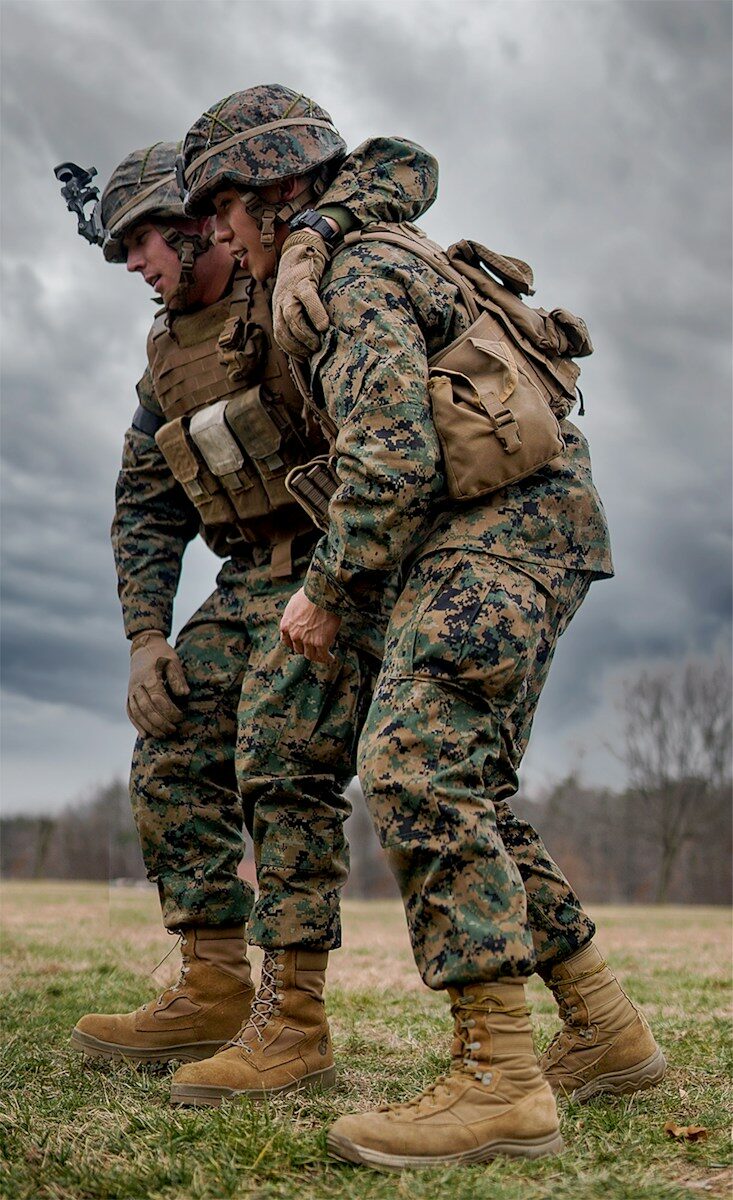
| Kate (0:40) | So this was never on my radar until my husband, he served with an army regiment and when he was a veteran he started to exhibit quite acute issues. At first they, professionals thought it was a mental health, well a variety of different mental health issues and he was diagnosed with complex PTSD amongst other things. But as time went on, it wasn't working, medication wasn't working and he started to exhibit more symptoms, more physical symptoms and I just started to question what the system was doing and what they were diagnosing him with and what, really importantly, they were medicating him with.
And so I started to just branch out and started to ask questions, read research papers and it snowballed into where I am now. |
|||
| James (1:37) | Yeah, and try and understand things. So let's just sort of pick up something you said there. So he was serving in the forces, there wasn't an obvious catastrophic injury, he sort of finished serving, he'd come back and then you sort of noticed that things weren't kind of quite as they should be. | |||
| Kate (1:53) | So James had a bleed on the brain. He was thrown from a vehicle in 2002 before he was deployed to Iraq in 2003. But the symptoms from that blunt force trauma didn't relate to what was happening to him.
Usually with blunt force trauma injury, you have that initial injury, you kind of plateau, you rehab, you have some form of increase in recovery. James was having the other way around. He was, years later, he was then having that steep decline along with various other symptoms and it just didn't add up. And actually, when the penny started to drop was when I watched a film called Concussion with Will Smith, and I kind of went, actually, do you know what, that's what my husband's experiencing, or the gentlemen that were portrayed in that film, I kind of went, I wonder. And that's when I started to think, actually, could this be a physical issue, not saying that there wasn't a mental health issue there as well, but was this a physical issue that hasn't been addressed? And that's when I started kind of reading, asking questions, and I started speaking to experts all over the world. And then it became this snowball effect where I was reading these research papers about the effects of blast and overpressure that was really starting to gain some momentum. There'd been previous papers written about it, but there'd been some momentum, especially in the US, Canada areas, especially US. And so that's when I started to branch out and people weren't answering me here in the UK or couldn't give an answer really kind of related to what was happening to James. And so when I was speaking to these professionals in other areas, what they were saying, I was kind of, okay, okay, yeah, this is what is relating to him. And I wasn't actually saying what James was experiencing. So I was kind of blind testing them, if that makes any sense. Just so I could say to myself, actually, I'm going down the right rabbit hole here because it did become a massive rabbit. I'm still going down that rabbit hole. |
|||
| James (4:31) | I bet. Yeah. So is it something to do with a lack of kind of recognition of those kinds of injuries and those causes of injuries?
You know, if somebody gets blown up, it's obvious what's happened. But if we can get these kind of almost sort of secondary injuries, you know, you weren't in the heart of this catastrophic event, but you were still affected by it. And it's easy to assume that you were affected mentally by it. Many veterans we know suffer PTSD, but there may be some physical kind of consequences as well. |
|||
| Kate (5:01) | Exactly. I think previously we've been kind of, not poor, but invisible injuries. When we can't see something, we kind of don't address the issue, especially professionals.
If you're walking into a room and you're seeing a physical health doctor and there's nothing they can physically see to address, it's very hard to say, actually, I think it's this. You know, someone walks in with a broken arm, someone walks in limping, it's easier to kind of start the ball rolling. When somebody is like James, he has a sleep pattern, his irritability, anxiety, balance, memory, all that good stuff as well as endocrine issues, pituitary system issues. And you kind of have to start picking them apart. And unfortunately within our system as well, our systems aren't very good at talking to each other. So when you're seeing multitude of different professionals in different areas, them talking and putting the whole picture together, putting the puzzle together is really difficult. And that's where I had to step up and become that care advocate, care coordinator, another hat for me and start putting that puzzle together and correlating evidence for everybody to look at. |
|||
| James (6:33) | So obviously you're doing this research, you want what's best for James, you're trying to help him. And then there comes a point where you think other people are stuck in this issue, maybe I can help them as well. | |||
| Kate (6:47) | Yeah, I was going to some NHS England Armed Forces meetings and meeting up with different veterans and different carers. And I started to meet people that were in the same but different situations and started building relationships. And actually, we started going down the same rabbit hole together.
And then from that, I started doing some newspaper pieces, and then people started to come to me. And it's flown into a point where I've got cohorts of families and veterans that I help support and navigate through systems. And also now I have researchers, professionals, government, people within government departments coming to me. And yeah, it's snowballed into where I am now. |
|||
| James (7:52) | Yeah. And how do you feel about that, Kate? Are you sort of pleased?
Obviously, you're proud of the things that you've done and you're doing. Do you think, hang on a minute, I shouldn't be doing this? Somebody else should be in charge of this? Or do you think, well, if it's down to me, I'm going to do it, right? Because people need help out there. |
|||
| Kate (8:11) | Oh, definitely. I'm quite stubborn, I'd say. At the beginning of all this, I was probably an emotional wreck because of everything that was going on.
But I think I had this thing in my head where we sink or swim. You know, I have my family or I don't have my family basically got to that point. And I was hellbent on keeping my family together as one unit. So that's where I was. But nowadays, I am a bit aggrieved that I've been put into this situation. I don't think you can't be because, you know, like this week, I've been here, there and everywhere. I'm answering emails. I'm contributing to different things. And I'm tired and people ask more of you. And where I am proud of that, it's exhausting. I'm like, I just need a Saturday off. I'm not sat at my laptop. You know, coming up with something. But no, I'm glad to be I've been incredibly lucky. And we've been incredibly lucky as a family to meet some amazing people. And that's from the families, the veterans to the professionals, the researchers. I had a lady actually make me a cup of tea who sits within the DoD. And that for me for a minute was like, oh, I've got a bit of imposter syndrome here. Or what am I doing here? But I sat around the table with her and I was thinking, “actually, do you know what? I've worked to be here. I've worked to make change. I am hopefully making change for people.” I really hope I am because I wouldn't be here now if that wasn't the case. If I didn't believe that. The primary reason for keep going is because I don't want any of the family or veterans to go through what we've been through. If I can stop that for one veteran or one family, then everything that we've been through as a family and the nights of reading papers until early hours has been well worth it. And I'm hoping that actually this year feels like a bit of a springboard where everybody's really coming together because none of this works off one person. It has to work as a group. And everybody has to be working together to create change because that's the only way it happens. |
|||
| James (10:45) | Absolutely. Yeah. And it needs a strong figurehead to kind of lead that change.
Right. And that's you. Well done. And thank you. What kind of change specifically are you looking to do? Is it about sort of recognition of particular causes or types of injury? |
|||
| Kate (11:02 ) | So recognition of traumatic brain injury caused by blast and overpressure and the cumulative effects of concussions from small arms fire to firing a tank. All that actually can cause a traumatic brain injury. But although the MOD, I don't know if they recognise it.
They're doing a lot of research in that area. There's a lot going on in that space and we're thankful for it. But we need more recognition and things to start happening on the ground as well for those serving personnel. So it's happening in the States. They're putting things on the ground to lessen the effects of those serving personnel while on exercise or training. That needs to happen. In the US, they also now do cognition testing before they actually join. So they have a baseline of where someone is. That could be could be implemented in the UK for our armed forces. And also then there's that transition out into civilian life. So things could be done in resettlement. Things come, pathways could be created within the NHS armed forces space. But currently that's not happening. It's a very difficult. There is no pathway. It's a very difficult area where unless you really have someone in your corner fighting for you, it's a really difficult space. And when someone's poorly, we all know that's just not going to happen. It's just not physically and mentally, you know, available for that person. And that's where it's really heartbreaking. And you can see those consequences of those veterans ending up in the criminal justice system, on the streets or the worst thing, committing suicide. We need better pathways and recognition for traumatic brain injury and education. Education is so important for all this. And that's from GPs. GPs get very little education within this, even with the veterans accreditation from the Royal College of GPs. Yeah. And education for the veteran and the serving personnel as well, because they aren't very little will be aware of actually what this is. |
|||
| James (13:40) | Yeah, and I guess why should they be? You know, it's not something you think about. You can imagine that somebody has this kind of blast injury.
They go home. Obviously, their family and their loved ones just want to do the very best for them. But they're not… Why should they understand what's going to happen? All of us that were thrown into brain injury don't know anything about it. We all have to kind of learn. And that's easier for some than for others. |
|||
| Kate (14:05) | Oh, exactly. Exactly. But there should be those support systems there for them.
And, you know, those support systems like the GP, A&E, etc. They're not educated. They don't know. So it's not a criticism of those people in those systems, because if we're not telling them, what can we expect back from them? |
|||
| James (14:29) | OK, Kate, do we have any idea of the prevalence of these kinds of traumatic brain injury amongst sort of serving personnel? Is it huge numbers of people? Is it odd cases here and there? | |||
| Kate (14:40) | So actually, a gentleman from the MOD actually did an ITV news segment, which said there could be thousands living with undiagnosed TBI for this cause. And that was on a national TV segment. So I'll go for his word that there could be thousands.
It's very it's a difficult situation because unless you're addressing and looking for the issue, how can you see numbers? Another issue is about coding in the NHS as well and making sure these guys are properly coded. If they are diagnosed with TBI due to blast overpressure, that people know how to code them correctly. It is something another thing I've been doing. But it's like I say, it's a big rabbit hole. |
|||
| James (15:37) | It's interesting in that I've had similar conversations on the podcast with people who have been victims of intimate partner violence, people who have had their injuries through sport. And there's these same things about lack of recognition, the problems of where does it fit in the coding? And how do you describe it so that we can kind of capture these metrics?
We just don't know how many children in school have brain injuries. We don't know how many women who are victims of violence have suffered a brain injury. We don't know how many service personnel have had brain injuries from the kind of things that you describe. |
|||
| Kate (16:11) | It's like we need a whole new thought process in how we're doing this across brain injury. It kind of staggered me really when I first came into this about how underfunded the brain was in general from different diseases, etc. I was kind of flabbergasted because without your brain, you just don't work.
So I just find it mind boggling the whole situation. But there is a way through. It's just we need people within the right spaces to be listening and to come around the table, because ultimately, actually, we're so concerned about costs nowadays, which is massively important, especially within defence and the NHS, etc. Actually, if we create better pathways, we create things like cognitive testing, baseline testing at point of service and throughout service, we mitigate the risks within training, etc. Actually, that cost level will come down because these guys, their injury levels are going to be lower. They're going to get downgraded less, so they're going to be available for active service more when they go out and become a veteran. They are going to be more, hopefully be more able to function within civilian life. They're not going to be accessing NHS services as much, maybe not getting in contact with the justice system. There's several actually huge benefits from actually addressing this issue now and creating a better system. And the most important thing is actually that person is going to benefit. They're going to have better outcomes. Their families are going to have better outcomes. And that ripple effect upon their children as well, their long-term outcomes, they increase because they're not seeing their parent, suffer, they're not seeing them in different circumstances. We've had those experiences of the criminal justice system, etc. And I just don't want people to be going through that. |
|||
| James (18:27) | No, absolutely. It's almost as if what we need is a joined-up cross-governmental action plan for acquired brain injury. | |||
| Kate (18:36) | Yes. | |||
| James (18:3) | Listeners to the podcast will know that we have been trying to get this for about five years now. The latest version was supposed to come out in June of 2026 and didn't. But it seems like it's just such an obvious thing to do, to connect these departments together.
Somebody might have to spend a little bit of money up front, but the savings seem kind of obvious, don't they? And it's not just financial, it's those sort of social costs that you were talking about as well. |
|||
| Kate (19:05) | Definitely, absolutely. It just needs addressing. And I think that paper is actually on the minister's table at the moment, from what I was told.
But it's still taking time. It's still frustrating. Because even when it signs off, it will take time then too. And it just feels like we need a bit of momentum, positivity. But there's a lot of good people in this space, a huge amount of good people. And there's a lot of people that don't get recognition about the pieces they're doing to create better outcomes for, you know, not just military or veterans, but the whole TBI community, just to get it over the line. |
|||
| James (19:56) | Absolutely. | |||
| Kate (19:58) | So frustrating, isn't it? | |||
| James (19:59) | Sorry. But well, you are one of those passionate individuals, Kate, who are striving to make this change and improve things for other people. And we all thank you for the hard work that you're doing in this space.
I want to just touch on technology. We are a health tech research centre. You mentioned about sort of cognitive testing and getting those sort of baseline things. Is there other tech that could be useful in this space? We know in sports, for example, there's biomarker things being developed. You can tell whether someone's suffered an injury quite quickly with a simple blood test or something like that. Are those kinds of technologies coming through in service as well, do you know? |
|||
| Kate (20:35) | So Birmingham are currently doing due to start a biomarker testing as well for service personnel. There's a big research piece going on there. That runs alongside MEG, the scanning technology.
So that's being done with Nottingham and the MOD. I think it's been funded a lot, a huge part of it's being funded by the American DoD. But it's time, it's time. These things take time to do, to do on the ground and then analyse it all and come out with a paper. We need actually stuff happening now and there's a lot of stuff that can happen now. Tech wise, there's other things coming through. We really need to be using stuff and implementing it now. I mean, I'm all for research. I'm more than happy to contribute on pieces of research and currently I have and I am currently doing so. But the frustration is that isn't translating into real life benefits for people on the ground that this is affecting. |
|||
| James (21:55) | Yeah, so we need to get some action in place. And if you're listening to this podcast and you're one of those people, crack on. We do have actually quite a big evidence base for a lot of the things that we've talked about in this conversation already.
So let's do it. |
|||
| Kate (22:10) | There's always room for more research as well because we're only going to improve with the data that we have. Data is so important within all this. I can't stress how important and I love data.
Data is what I thrive off. But there is no reason why things can't be running in tandem, that we can't be doing things, working together and getting things implemented right now at the same time, especially for veterans. It's one of those things, isn't it? It's a double edged sword. But unless we're pushing forward, we're standing still and we're going backwards. So yeah, we need to be doing more. |
|||
| James (22:47) | Yeah, let's keep moving it. And what a great way to wind up our conversation, Kate. Thank you ever so much for finding the time to have a chat.
I will put a bunch of links to some of the things that we talked about in the podcast underneath this. Check out these things. Don't all immediately email, Kate, because she's really busy, right? But do touch base and find out what's going on in this space and do what you can so we all move forward together. Thanks so much for your time, Kate. Really appreciate it. |
|||
| Kate (23:10) | Thank you. Thank you very much. | |||
| James (23:12 ) | If you've enjoyed listening to this podcast, you can check out any one of the many other episodes on your favourite podcast supplier. Thanks so much. |
More like this:

Public involvement in research impact toolkit (PIRIT)
Free to download, PIRIT is a set of pragmatic tools which aim to support researchers working with [...]

Innovation Podcast – Neuroguard
James talks to paramedic Steve Purdy about a new device used with brain injured people in amblulances [...]
Patient Involvement Podcast – Jesús
Listen to James Piercy talk with Jesús, a member of our Public Oversight Committee, who suffered from [...]