

>
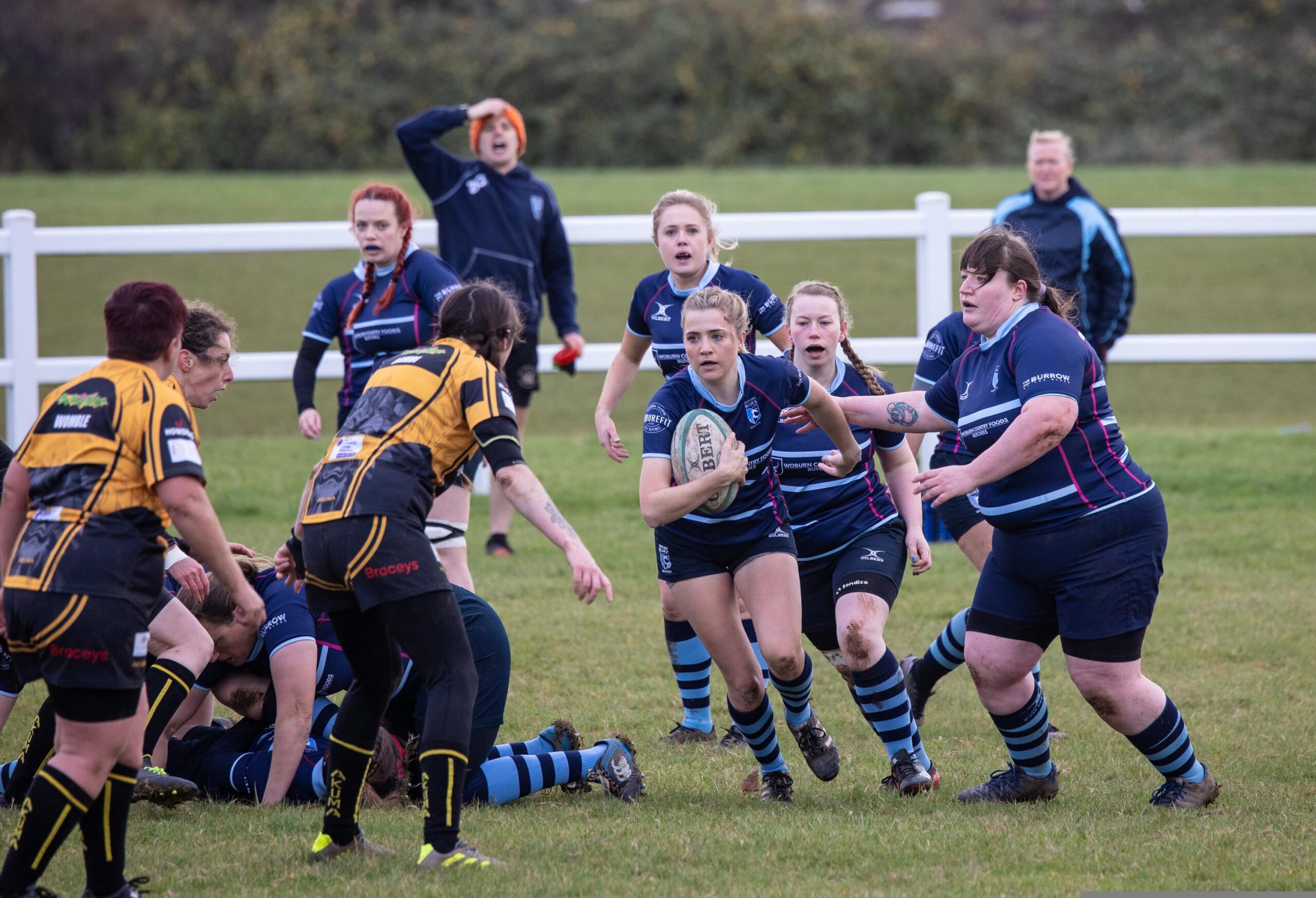
| James (0:08) | Welcome to another podcast from the HealthTech Research Centre in Brain and Spinal Injury. You've listened to like 30 episodes now, so you know what happens as I chat to really interesting people about stuff to do with brain and spinal injury. And today I'm joined by Ori Vajner, and Ori, you play rugby.So tell me a bit about your team. | |
| Ori (0:28) | I play for women's rugby at the University of East Anglia. I also play for a team called the UEA Valkyries, which is a team that is from North Walsham as well as the UEA Valkyries too. | |
| James (0:47) | Cool, that's great. And obviously both their teams are top of the league, winning all the trophies, yeah? | |
| Ori (0:53) | I mean, to be honest, this year we've had a bit of a hard year. I think both teams have really put in a lot of effort. I think we've grown as players, we've grown as a team in general.So we're not top of the league at the moment, but we were both promoted in those teams last year. So this year we've had a bit more of a struggle, a bit more of a challenge with the opposing teams. But I think it's something to just take in our stride.
We've stayed in our leagues, so that's something to work towards next year. |
|
| James (1:27) | Yeah, that's great. And now I have to pretend I know anything about rugby. What position do you play?You're one of the little ones who runs really quick up and down the side or one of the big heavy ones who charges in the middle? | |
| Ori (1:38) | Well, I'd like to say I'm one of the quick ones, but I'm not that fast. So I play either scrum half, but this season I've been playing a lot more of fly half, so nine or ten. And that has been quite an experience as well.I've never played fly half before, so that was something to get used to and learn about through this whole season as well with the team, which has been interesting. | |
| James (2:08) | Cool. Well, obviously the reason I've got you on the podcast isn't to talk about how amazing your rugby team is, but because of concussion. So we know that concussion is common in sports and particularly in impact sports like rugby.So do you have any experience of concussion yourself? Have you been knocked unconscious or dazed? | |
| Ori (2:27) | So I haven't been knocked unconscious, but I have had a concussion. A bit of a, not really pitch related actually, but one night after a great night out, we came home and we were doing some kind of tackle practise and I was being tackled and obviously we'd never moved any of the furniture and so my head went straight into a piece of furniture. So that's been my first and only instance of concussion, which yeah, has been interesting that it hasn't been on the pitch, but that actually did kind of take me out of games for at least two to four weeks, depending on obviously how long the symptoms were.And actually I found my symptoms only started about two days later, which was quite interesting too. | |
| James (3:19) | Okay, and imagine you've seen other people have concussions on the pitch in the game. | |
| Ori (3:25) | Yeah, a hundred percent. I think last year, because we were doing so well in our teams, it seemed that we actually weren't getting a lot of concussions at all. Well, we kind of, we weren't at all.And this year the rates have been much higher because we are playing in higher leagues and we're playing people that obviously are much more challenging for us. So the amount of concussions within the team has severely increased, which obviously is quite interesting. | |
| James (3:55) | Yeah. So that's kind of worrying. I think that, do you think that is because there are more collisions or is it more recognition or is it both of those things? | |
| Ori (4:07) | I think it's actually both of those things. I think the collisions at this level are much harder that, so they've got more force and more impact behind them. However, I think it's also due to more recognition.I think a third factor that we also have in as well as last year, we played just for the uni team about 10 to 12 games in that season. And this season, just because of how the leagues worked out, we've only played six. So because of that, the training contact wise has been less intense.
And so you actually haven't primed your body. You haven't primed your neck and your head properly over the months to play these games because they're so far apart from each other. |
|
| James (5:00) | Yeah. To build up that kind of resilience, I guess. So is there a difference, do you think, in the causes and the rates of concussion between the women's game and the men's game? | |
| Ori (5:11) | I couldn't particularly actually find any statistics that compared directly the female and the male's rates of it. However, there are lots of factors that I found that actually influence females getting concussion. And so it is found that actually females or women can and are more vulnerable to getting concussion over men.And some of those factors which I have kind of looked into have been something like hormonal factors. So during your cycle, you obviously have different hormonal levels during that whole time. So, for example, towards the end of the follicular phase, that's when your oestrogen is highest and that oestrogen is able to reduce brain swellings and also help to kind of reduce, not reduce, help axonal regeneration.
And so things like that actually lower concussion symptoms afterwards if you were to get concussed, but also actually give you the ability to maybe avoid a concussion if you were in that phase of your cycle versus being in a different one. |
|
| James (6:31) | Wow, that's fascinating. Can we make some evolutionary speculation as to why that protective factor might be there, do you think? Or is it just, you know, is it kind of a byproduct of other things that are happening in women's bodies around that time of the month? | |
| Ori (6:47) | Gosh, obviously, I haven't really looked into an evolutionary factor like that. It could be a bunch of things, I suppose. I mean, obviously, our bodies weren't particularly bred to play rugby. | |
| James (7:04) | Is there a difference between the kinds of causes of concussion, do you think, between women and men? I seem to remember reading something a while ago that women are a bit more susceptible to kind of whiplash kind of injuries, whereas men just sort of charge into each other or hit the ground.Is that true in your experience, do you think? | |
| Ori (7:21) | From what I've read, from what I've seen as well, it does seem to be there are a lot more girls actually saying, oh, I feel actually a bit whiplashed versus, oh, I've actually hit my head. From the research that I've done, it's been shown that women's necks are smaller in kind of girth than men's. And for that reason, they actually don't have as much muscle, they don't have as much strength behind them.So it would be plausible to kind of say that actually a concussion sustained in a woman could be or is more likely to be from whiplash versus actually a head-on-head contact or head on the ground. Obviously, you will have those cases as well, but it's less likely that a man could actually sustain a concussion from whiplash. | |
| James (8:13) | Yeah, just and obviously we're talking in general terms. | |
| Ori (8:16) | Yes. | |
| James (8:16) | Yeah. Yeah, that's kind of interesting. So we know that in the professional game, there are changes happening to the rules in rugby, that the height of tackles has been changed, for example, to try to reduce the risks of head injuries.Is that coming through to the level of game that you're playing? And even, I guess, the real sort of grassroots, even underneath university teams? | |
| Ori (8:40) | So at the moment, we've had a few refs, not a lot of refs, obviously starting to implement this stuff about tackle height. Obviously, your ref is your umpire. He's the guy that makes the on-pitch decisions.And we don't have things like a TMO to be able to say, oh, well, that tackle was definitely this or that was definitely that, et cetera. So it is kind of down to their discretion. We did have a ref the other day say to us, obviously, the tackle height has been lowered.
But as this is a new thing that's been brought in for us, if you are slightly higher than that, I won't penalise you for that. It's only if you're drastically high or there's something that is, you know, really outrageous that I see. So I think in that respect, they are trying to move it in. But you're now looking at a group of people that have obviously been trained in one way. And now you're trying to alter the training. Realistically, it doesn't sound that difficult to do. But actually, when you've gotten your body and your brain into a way of thinking that this is the height I need to tackle that and below, now trying to get even lower than that is something that you've actually got to adjust to and retrain yourself into. |
|
| James (10:02) | Yeah, it's one of those things that's become automatic, I guess. You don't think, oh, judge how high I'm going to do this. You just go, right?Yeah, so that's difficult. | |
| Ori (10:10) | Exactly. And another thing that I found is obviously with fatigue, your discipline and your control of your body is lowered. So as the game goes on, you are more likely to make that high tackle or more likely now to kind of reach up into that area that is now off limits. | |
| James (10:32) | Yeah. So this change is going to take a while to come through. Obviously, it takes a while for the rest and people to start to enforce it.It takes a while, as you explained, for the players to get used to it. Let's picture ourselves two, three years down the road and everybody's doing it. Is it going to change the game?
Is the game going to feel and look the same for the fans and for the players? Does it really change what's happening in a match to do something like lower the height? |
|
| Ori (10:57) | At the moment, I think it could potentially change how it looks in terms of obviously you've got to get used to that height. So you have a risk of more players being sent off. You have a risk of slowing the game down to try and discipline your teams into fulfilling those requirements of being that certain height.So I think in that respect, it could potentially make something right now look different. However, in a couple of years time, you'd hope and you'd be thinking that from that grassroots level, they've been teaching all of these children that and that's been brought up. So now it shouldn't really make a difference.
It shouldn't really make an effect. It is still rugby. You are still tackling. So hopefully it shouldn't be anything different in terms of that. |
|
| James (11:51) | Yeah, and obviously everybody's doing the same thing. It's not like one team is suddenly going to be at a disadvantage or anything. | |
| Ori (11:58) | Yeah, exactly. I think to be honest, it's harder. It's harder for those tall people.And it's harder already for them to get low. But it's just, again, trying to train yourself into that, trying to make it possible for you to do that. And I think, you know, now it's just something a little bit lower that everyone's got to keep in mind.
And that's that. |
|
| James (12:17) | We've talked a little bit then about the concussions obviously seems to be fairly kind of common. What happens at the moment in the game? So someone gets knocked, they might not be unconscious, but they're clearly a bit confused and dizzy because they've had a nasty bang on head.What happens? Do they have a rest? Do they go back on?
Do they have two weeks off? Is there a kind of policy in place? |
|
| Ori (12:38) | That's what we've been trying to implement this year is some clear guidelines. We generally use the RFUs guidelines and go from that. However, at the moment we've had issues in reporting behaviours.Players are aware that obviously if they report that they're injured, if they report they have a concussion, then they don't get played. They don't get selected and they are on light training when that is allowed. So at the moment, if you do become concussed in a game and you don't tell anyone that you have symptoms, you don't show physically or don't look like you actually have been dazed or hit or concussed, then quite frankly, there's nothing we can do about it.
On the other hand, when it is clear that someone has had a hit or is concussed, we do take them off and we do get the physio to have a look at them and it's basically down to the physio to decide whether they are allowed back on, whether they have to sit out for the rest of the game if they are concussed to begin with or if they're not. And factors like that. And then it has to all be written on that match card at the end of the game to basically be pinged back to the RFU to let them know about the concussion rates and things like that as well. |
|
| James (14:07) | Yeah, it's good that kind of recording in place. I guess it needs a kind of cultural shift. It's really difficult for people to say, look, I know that I can't play for a few weeks because that's who you are, right?You're the person who plays rugby and obviously you want to be doing that stuff still. Do you think that we're going to get to a point where people recognise that actually, yeah, I need to declare myself that I'm not good to play and I do need to properly have a rest? Is that sort of change ever going to happen really or are people always just going to be driven to get back on the pitch? | |
| Ori (14:40) | I think it depends on the team for starters. I think there's a lot of factors coming into that. For example, our squad depth is very small.So we have about maybe 20, 25 maximum people that we can actually pick for on a good day. And I think that's a big factor is people feel like they need to play because otherwise you can't build a team. I think another factor coming into it as well is you can see that, I mean, comparing football and rugby, for example, and I might be kind of hated after I say this, but rugby, there's always that mentality of you're hit, you get up, you go again, you make another tackle, you're injured, you play on until you physically can't play on.
Whereas I think football, there's more of that thing. Oh, someone tripped me. I'm now going to cry on the floor and roll around a little bit. So I think for rugby, there's that mentality of you have to keep going until you can't. And I don't think, unless there's something in the bigger picture that changes around that statement, I don't think you'll get many people willing to sit themselves out when they feel like they are able and capable to play. |
|
| James (16:07) | Does that worry you? It worries me a little bit, I have to say. | |
| Ori (16:12) | Yes, yeah, it does. I think people aren't trying to be martyrs. They are trying to think of the good of the team.And I think it gets to a point where the only reason that they'd sit out is because they realise that actually their bodies aren't capable of playing the rest of the game and it would be better to have someone come back on. | |
| James (16:37) | I was talking to a young man the other day, a rugby player, and he said, oh, my most recent concussion, he said, like it happens every day, he was knocked unconscious, went back on the pitch 10 minutes later and then was taken off because he clearly didn't know what he was doing, it was all over the place. So we need to be strict about this stuff, don't we, because there's someone who clearly isn't capable of playing. But because it's your identity, it's who you are, and you don't want to let down your teammates.Obviously, you want to get back on there. I don't know how we make that kind of real shift to say, you know what, actually, it's better for the team if you don't go back on in that kind of situation. | |
| Ori (17:20) | I think we had, as you said, a great example. I knew a guy who was concussed and he knew he was and he kept playing until he basically was his vision was blurred and he couldn't really see anymore. And that's only when he was like, actually, I need to need to come off.Now what they're doing in the kind of big games like the international ones, Six Nations, things like that, is they've got these mouth guards that are clear. And I believe when you have a head collision, whether that's with the ground, someone's knee, a boot, whatever it may be, that mouth guard will then flash red. And until that person has been checked and, you know, seen whether they can actually come back on or not, that mouth guard will keep going.
So I think that's something that actually is a good thing that has been implemented, a good thing that possibly shows us where to go and science wise, rugby wise, sport wise in terms of things that can keep evolving to help those hidden injuries in a way. |
|
| James (18:35) | Yeah, and watch this space listeners for some really interesting tech happening in this space. Intelligent mouth guards can record Energy of Impacts. And also a really interesting project about how we connect that to damage to the brain, because obviously a bump on your teeth isn't the same as bump on your brain.They're in different places, but there's some interesting stuff happening. I will try to get some people on the podcast to talk about that tech in the future. Well, Ori, listen, thanks ever so much for finding the time to have a chat to me today.
Good luck with the rest of your matches. Stay safe and win some trophies, right? |
|
| Ori (19:09) | Well, thank you so much for having me. It's been really nice to talk to you as well. |
More like this:

Prevention and Education Theme Podcast
Listen to our Prevention and Education Team, Dr Mark Wilson and Professor Julie Mytton, talk with James [...]

Paper on PPI in brain injury research
James, our PPIE lead, has written a paper outlining the development of our outreach programme over the [...]

Research Podcast – Matthew Colbeck
Listen to James Piercy talk with researcher Matthew Colbeck Matthew's work explores the ways that coma and [...]